
Project governance
Map rights, responsibility, and deliverables together
A file handoff does not automatically grant the right to translate, dub, edit, publish, or sublicense it.
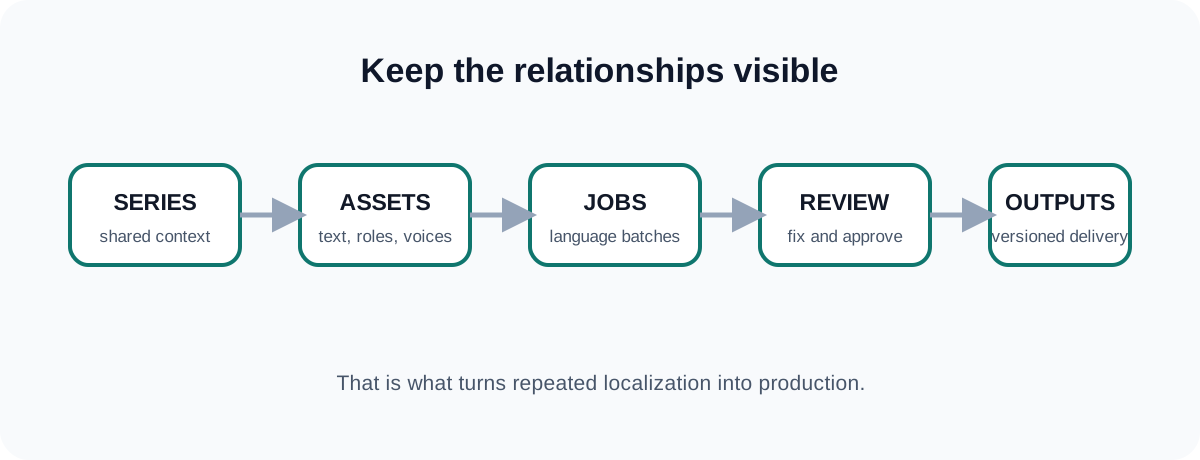
Direct answer: For each output, record who authorizes it, who supplies the source, who reviews it, who accepts it, and where it may be released.
What to keep clear
- Separate material access from territory, language, and channel rights.
- Name the acceptance owner for each localized version.
- Keep delivery requirements attached to the authorized release scope.
Projects become fragile when a team treats possession of a video file as proof of every downstream right. A practical handoff lists the source assets, permitted operations, target territories and languages, channels, dates, and required deliverables.
This also clarifies responsibility. A translator can recommend a change without being the person who approves a release. A distributor can own a channel package without owning the underlying media. The names and contract boundaries should survive the handoff into production.
Related theme: Stakeholders, rights, and responsibilities
Sources and scope. Weydub public rights and delivery boundary guidance. Checked 2026-08-25. This entry defines a working concept; it is not a universal legal, market, or performance claim.