
Subtitles or dubbing for short-drama release?
Compare speed, audience access, production depth, and rework before choosing a first version.
View comparison ->Weydub Insights / Comparisons
Decision guides comparing subtitle, dubbing, extraction, production, and review paths for short-drama localization.
Compare speed, audience access, production depth, and rework before choosing a first version.
View comparison ->Choose the path that matches the evidence present in the source media.
View comparison ->The right operating model depends on repetition, shared context, and handoff requirements.
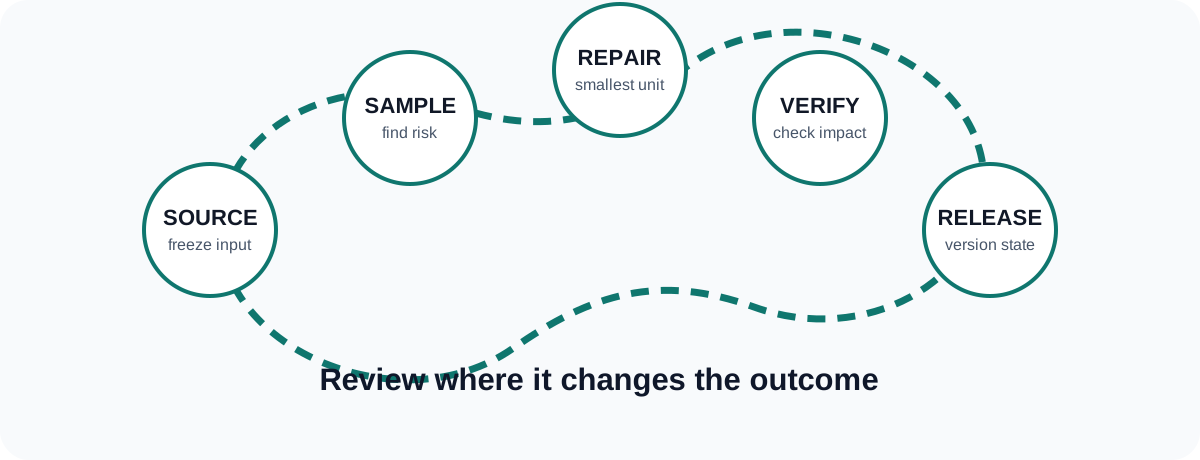
View comparison ->A defect should be repaired at the smallest unit that preserves downstream consistency.
View comparison ->The best route depends on series context, language risk, turnaround, and the cost of a wrong decision.
View comparison ->Choose a voice path by consent, role continuity, performance needs, budget, and revision plan.
View comparison ->Compare handoff cost and shared context, not only the number of buttons in the interface.
View comparison ->The choice changes acquisition, monetization, rights, packaging, and the way a library is operated.
View comparison ->In-app purchases and advertising monetize different audience behavior and require different content and funnel decisions.
View comparison ->Subtitle format is a delivery decision shaped by platform support, styling, editing needs, and audience control.
View comparison ->Each format creates a different entry point, watch pattern, and package requirement for a localized series.
View comparison ->Choose by source quality, composition, motion, repeat volume, and how much of the original picture must remain intact.
View comparison ->Compare context handling, terminology control, timing, review, and integration rather than treating model labels as a quality guarantee.
View comparison ->Compare character control, scene generation, text handling, editing, and licensing instead of comparing brand names alone.
View comparison ->Runway, Kling, Luma, and similar systems should be tested against the exact publishable shot, not a showcase clip.
View comparison ->Scheduling and repurposing tools solve channel operations, not translation, rights, or final quality by themselves.
View comparison ->Editing suites and localization workflows overlap, but they optimize for different jobs and handoff boundaries.
View comparison ->A distribution platform should be evaluated by rights scope, territories, submission requirements, reporting, and exit terms.
View comparison ->Product observations are useful when separated from claims about market size, revenue, or universal user behavior.
View comparison ->Compare source handling, region control, moving-background repair, batch behavior, and export rather than relying on a single before-and-after.
View comparison ->API choice depends on context handling, glossary support, latency, cost, language coverage, and how the output enters subtitle production.
View comparison ->Voice quality is only one dimension: role mapping, authorization, timing, performance, sound mix, and output control matter too.
View comparison ->Video translation can mean subtitles, dubbing, voice replacement, lip sync, or a managed localization workflow; compare the actual deliverable.
View comparison ->Full review, risk-based sampling, and key-plot review trade speed for coverage in different ways.
View comparison ->Partnership structure changes control, risk, reporting, and the way rights and localization costs are recovered.
View comparison ->Subtitle work should be compared by source extraction, timing, batch scale, collaboration, and final delivery rather than interface familiarity.
View comparison ->Whisper, PaddleOCR, subtitle editors, and managed platforms differ in control, deployment work, review, and production responsibility.
View comparison ->The right alternative depends on whether the job is one clip, a language batch, a clean master, or a series delivery package.
View comparison ->FFmpeg, HandBrake, desktop editors, and managed workflows trade automation, styling, preview, and batch control differently.
View comparison ->Basic voice output, realistic voice production, and high-emotion dubbing are different promises and should not share one acceptance bar.
View comparison ->A voice can be correctly timed to the scene without matching mouth movement, and the two requirements should be reviewed separately.
View comparison ->Recap narration combines story selection, script writing, voice, picture edit, subtitles, and rights; a text-to-speech button is only one part.
View comparison ->Face APIs, manual character tables, and series-level role marking solve different parts of the identity problem.
View comparison ->Cost model is only one dimension; source privacy, batch limits, quality, review, and operational ownership can dominate the decision.
View comparison ->Team size changes the balance between manual control, shared context, automation, review, and operating ownership.
View comparison ->Upload limits, resumability, queue behavior, failure isolation, retry scope, and delivery state matter more than a single maximum file size.
View comparison ->The right entry point depends on who operates the work, how often it repeats, and how much business context must survive the handoff.
View comparison ->