
Global release
Market, language market, and territory are different
A target language does not by itself define where a localized short drama may be released or how it will be operated.
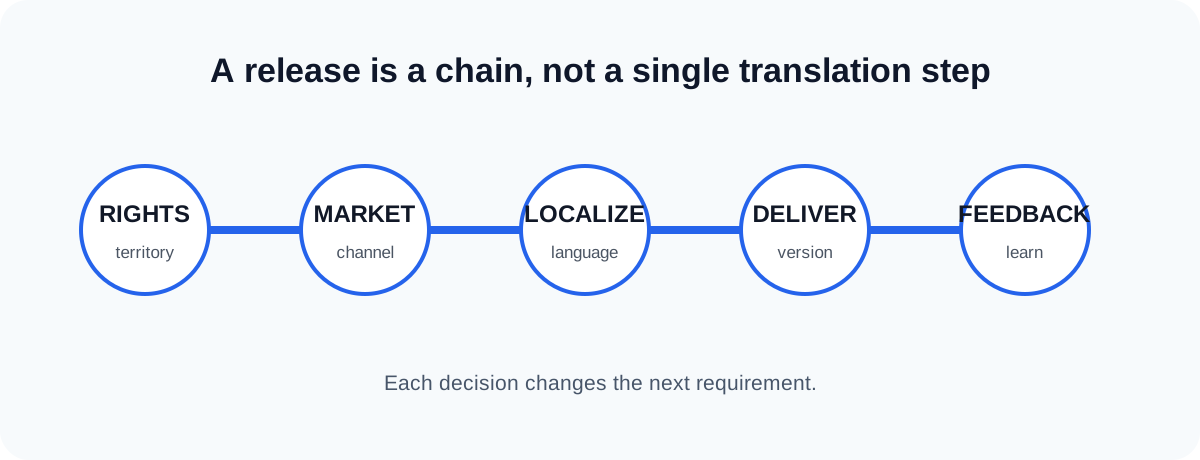
Direct answer: A market describes the commercial context, a language market describes the audience language, and a territory describes the geographic or contractual boundary. They can overlap, but they are not interchangeable.
What to keep clear
- Record territory and language separately in rights and delivery notes.
- Treat regional Portuguese, Spanish, Arabic, and English choices as localization decisions, not just translation labels.
- Check channel, window, and audience assumptions before production expands.
The same language may serve different territories with different cultural, platform, pricing, and rights conditions. Conversely, one territory may require more than one language version. This distinction matters when a team chooses subtitles, dubbing, metadata, and channel packages.
A useful release brief names the market objective, target language or locale, territory, channel, rights window, and expected output. That brief becomes the reference for translation and review rather than leaving the decision inside an informal message.
Related theme: Short-drama globalization
Sources and scope. Weydub public localization and delivery documentation. Checked 2026-08-25. This entry defines a working concept; it is not a universal legal, market, or performance claim.