
Capability map
Why subtitle, picture, translation, and dubbing have dependencies
Localization steps can be combined in a workflow, but they should not be treated as interchangeable or order-free.
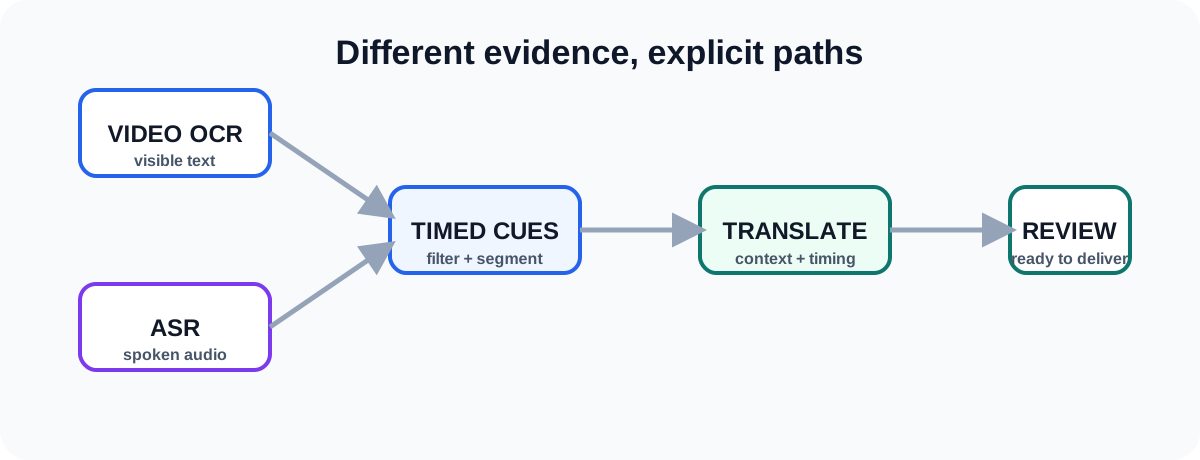
Direct answer: The correct order depends on the source: identify available text or speech, establish a usable source track, clean or preserve the picture as needed, then translate, dub, review, and package the result.
What to keep clear
- Choose OCR, ASR, or an existing subtitle track based on source evidence.
- Resolve source-picture and subtitle dependencies before final delivery.
- Keep translation, dubbing, timing, and review connected without claiming they are one operation.
Hard subtitles, clean masters, separate subtitle tracks, and speech-only sources create different starting points. A system should make that choice visible so reviewers know whether a line was observed on screen, recognized from audio, or supplied as source text.
Later steps inherit earlier decisions. A role error can affect translation and dubbing; a timing change can affect subtitle readability and voice performance; a picture repair can need a new visual review. Explicit dependencies make localized rework smaller and safer.
Related theme: Localization capabilities
Sources and scope. Weydub subtitle, picture restoration, translation, and dubbing explainers. Checked 2026-08-25. This entry defines a working concept; it is not a universal legal, market, or performance claim.