
YouTube delivery
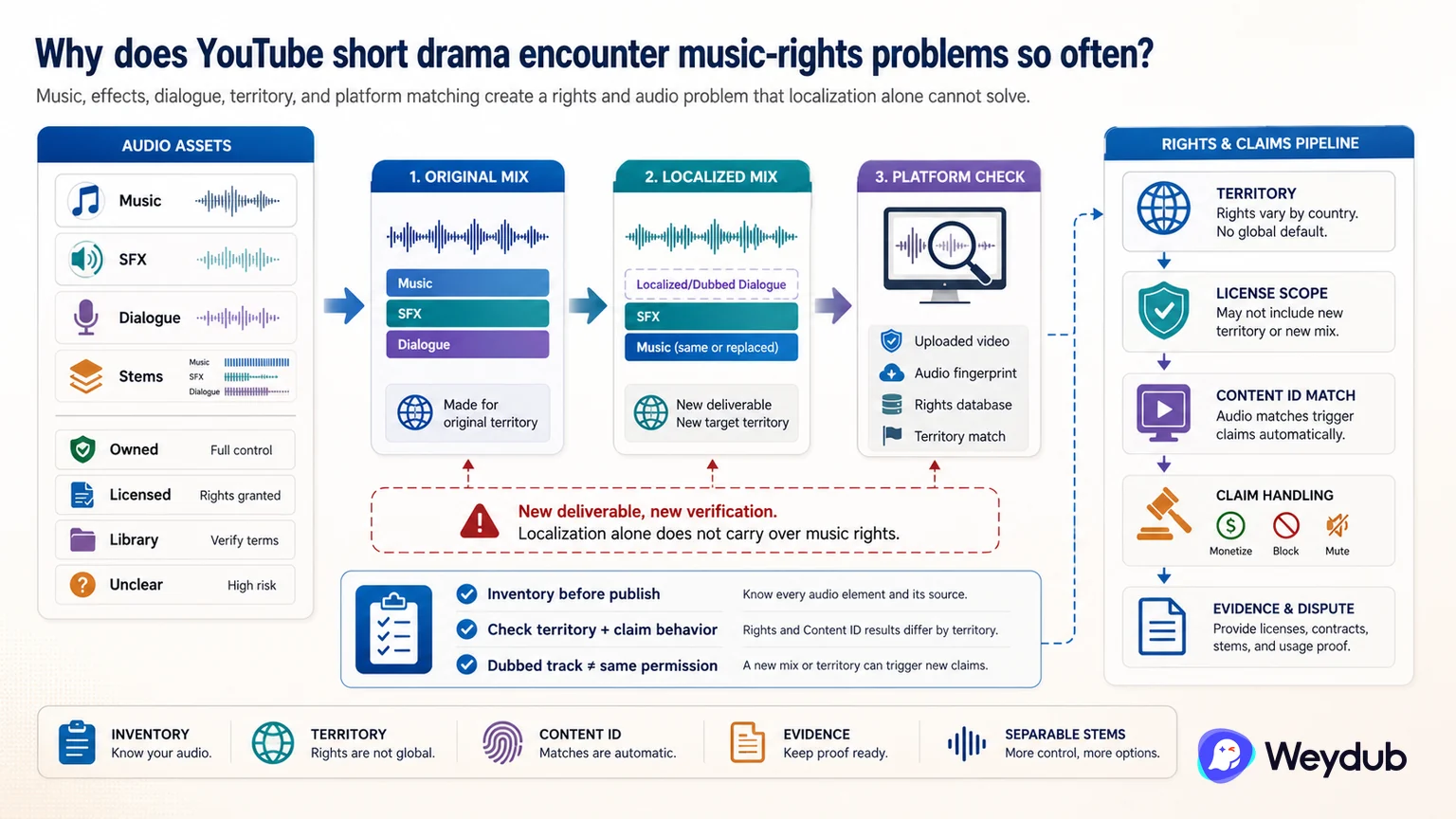
Why does YouTube short drama encounter music-rights problems so often?
Music, effects, dialogue, territory, and platform matching create a rights and audio problem that localization alone cannot solve.
Key conclusions
- Inventory music, effects, dialogue, and stems before publishing.
- Check territory, license, Content ID behavior, and claim handling.
- Do not assume a translated or dubbed track inherits the source music permission.
A localized video can be linguistically correct and still trigger a music claim. The platform evaluates audio and rights through its own systems, while the project may have different permissions for the original, a dubbed mix, a compilation, or a promotional cut.
Before release, identify which audio elements are owned, licensed, library-provided, or uncertain. Keep dialogue, music, and effects separable when the delivery or rights plan requires it. A claim response should have an owner and evidence rather than being treated as a post-publish surprise.
The release package should record the language, mix, territory, channel, and rights scope. A new localized track is a new deliverable to verify, not merely a translation of the old one.
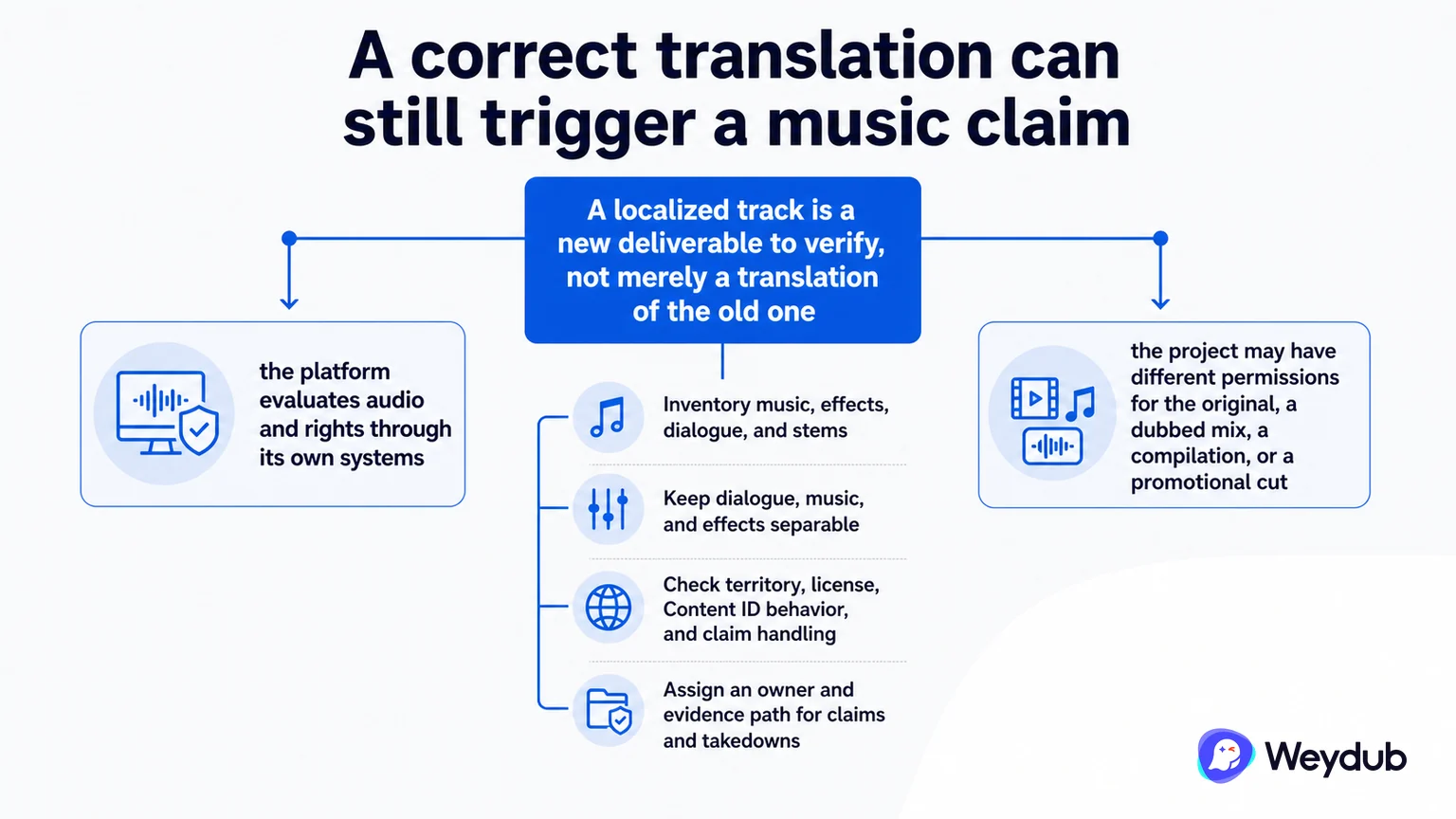
A correct translation can still trigger a music claim
The platform evaluates audio and rights through its own systems, while the project may have different permissions for the original, a dubbed mix, a compilation, or a promotional cut. A localized track is a new deliverable to verify, not merely a translation of the old one.
Before release, identify which audio elements are owned, licensed, library-provided, or uncertain. Keep dialogue, music, and effects separable when the delivery or rights plan requires it.
- Inventory music, effects, dialogue, and stems.
- Check territory, license, Content ID behavior, and claim handling.
- Assign an owner and evidence path for claims and takedowns.
Review each mix and use case
The same source music permission may not cover a dubbed version, compilation, trailer, or different territory. The release package should record language, mix, territory, channel, and rights scope, then verify the actual audio file intended for upload.
| Audio use | Risk | Release check |
|---|---|---|
| Original episode | Source license or claim | Master, territory, channel |
| Dubbed mix | New voice and music combination | Mix, rights, language version |
| Compilation | Longer timeline and repeated music | Cumulative package and claims |
| Promotion | Short cut or ad use | Separate promotional permission |
Prepare evidence before publishing
Do not wait for a post-publish claim to discover who owns the audio or who can respond. Record licenses, track versions, claim procedure, and the removal or replacement path before the channel package is approved.
- Inventory every audio layer.
- Confirm rights by territory, channel, and version.
- Prepare the intended mix and metadata.
- Run a controlled upload or rights check.
- Publish with claim and takedown ownership recorded.
Frequently asked questions
Does dubbing inherit the source music permission?
Not automatically. The new mix, use, territory, channel, and promotional scope may require separate verification.
Can a Content ID match prove infringement?
A match is a platform signal, not the entire legal determination. The team still needs the relevant license, scope, and response process.
Related theme: Distribution and delivery
Weydub workflow
Take the next production step
Prepare a localized version with subtitles, voice, timing, and a delivery path that matches the destination.