
Channel strategy
TikTok or YouTube for short drama? They are different businesses
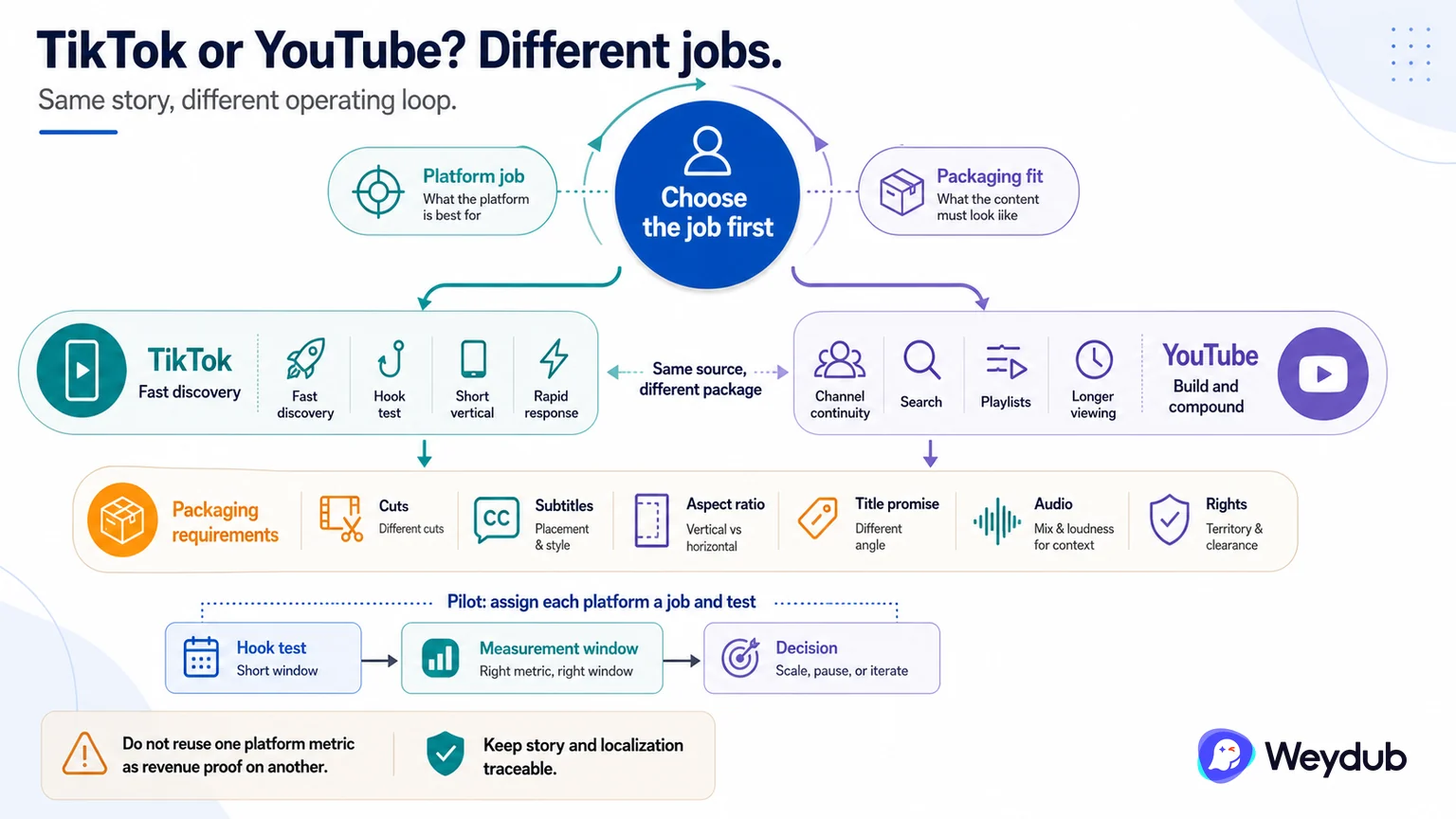
TikTok can support rapid content testing and discovery, while YouTube often favors channels, libraries, search, and longer viewing paths.
Key conclusions
- Define whether the first job is discovery, episode viewing, library building, or conversion.
- Prepare different cuts, metadata, and release packages for each platform.
- Do not reuse a platform metric as a guarantee of revenue on another platform.
A short drama can appear on both platforms, but the viewing entry point and operating rhythm are not identical. Short vertical clips may test a character or conflict quickly; a YouTube channel may need episode order, playlists, longer compilations, thumbnails, descriptions, and a reliable publishing cadence.
The channel choice changes production requirements. The same source may need different opening cuts, subtitle placement, aspect ratios, title promises, audio treatment, and rights checks. A package that is correct for one destination should not be assumed to be ready for the other.
A useful pilot assigns each platform a job and a measurement window. Keep the story and localization version traceable while changing the packaging required by the channel.
The platforms answer different release questions
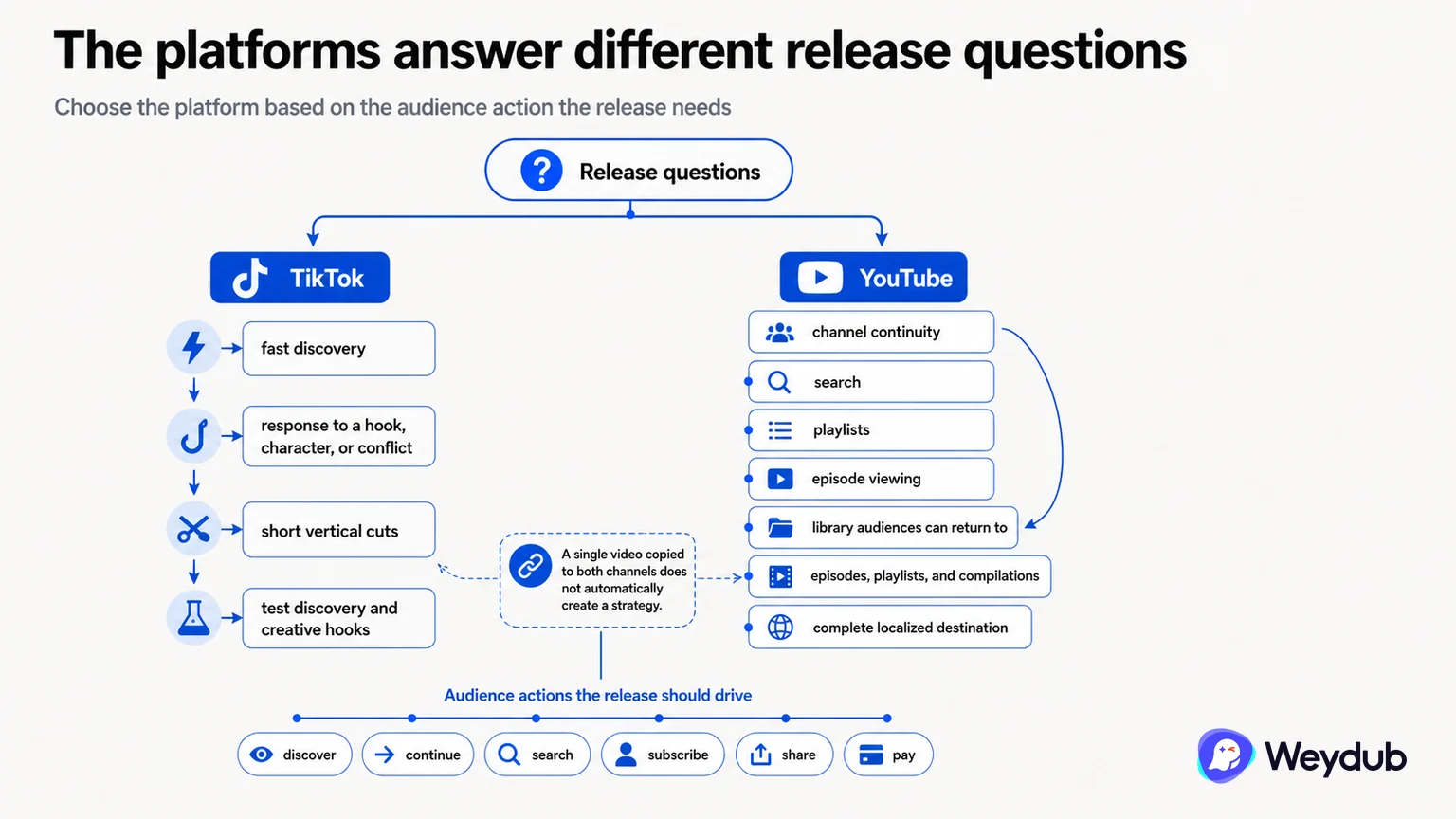
TikTok is useful when the team wants fast discovery and a response to a hook, character, or conflict. YouTube is suited to channel continuity, search, playlists, episode viewing, and a library audiences can return to. Both support several formats, but they do not create the same operating loop.
Choose the platform based on the audience action the release needs: discover, continue, search, subscribe, share, or pay. A single video copied to both channels does not automatically create a strategy.
- Use short vertical cuts to test discovery and creative hooks.
- Use episodes, playlists, and compilations for sequence and library viewing.
- Connect the entry format to a complete localized destination.
Package the same story differently
TikTok needs a fast promise, vertical framing, readable captions, and a clear next action. YouTube needs episode order, titles, thumbnails, playlists, captions, audio choices, and a consistent channel identity. The localized language, terminology, and rights scope must remain connected across both.
| Dimension | TikTok | YouTube |
|---|---|---|
| Primary job | Discovery and rapid response | Episode, search, playlist, library |
| Format | Short vertical or native cut | Episodes, Shorts, compilations |
| Package | Hook, caption, profile, next action | Title, thumbnail, playlist, chapters |
| Key check | Promise and retention | Sequence, rights, discoverability |
Use a linked channel test
A release can use TikTok to discover which moment attracts attention and YouTube to serve the full episode or series context. Preserve the localized source, version, link, and channel package so performance can be interpreted without mixing different edits.
- Define the audience action for each channel.
- Prepare channel-specific localized cuts and metadata.
- Link discovery content to the intended destination.
- Measure hook, continuation, and package defects separately.
- Use the evidence to refine the next market test.
Frequently asked questions
Should the same video be published on TikTok and YouTube?
The core story can be shared, but the cut, aspect ratio, caption treatment, metadata, and next action should fit each channel.
Is TikTok only for promotion and YouTube only for full episodes?
No. Both support several formats. The useful distinction is the audience action and operating loop for the specific release.
Related theme: Distribution and delivery
Weydub workflow
Take the next production step
Prepare a localized version with subtitles, voice, timing, and a delivery path that matches the destination.