
Partnership model
How is social-media operations different from rights distribution?
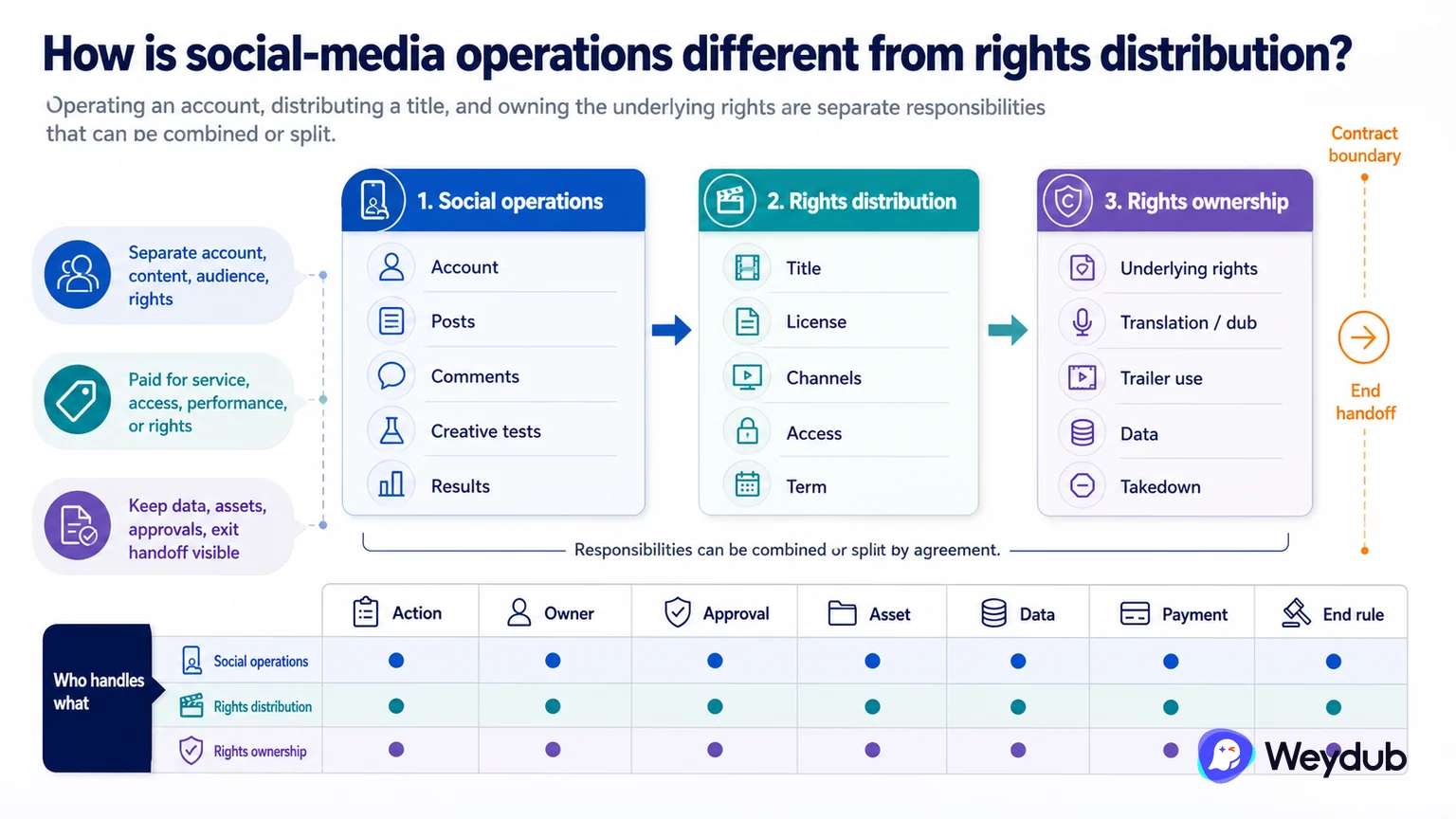
Operating an account, distributing a title, and owning the underlying rights are separate responsibilities that can be combined or split.
Key conclusions
- Define account, content, audience, and rights ownership separately.
- Clarify whether a partner is paid for service, access, performance, or rights.
- Keep data, assets, approvals, and exit handoff visible.
A social operator may schedule posts, moderate comments, test creative, and report results without owning the series. A rights distributor may license the title and choose channels without managing daily audience interaction. A platform operator may do both, but the contract should still distinguish the obligations.
The distinction matters when a localized asset is prepared. Who may translate or dub it? Who owns the account? Who can use the trailer in an ad? Who receives the audience data? Who removes the content when the term ends?
A short responsibility table can prevent a long dispute. Record the action, owner, approval, asset, data, payment, and termination rule for each partner.
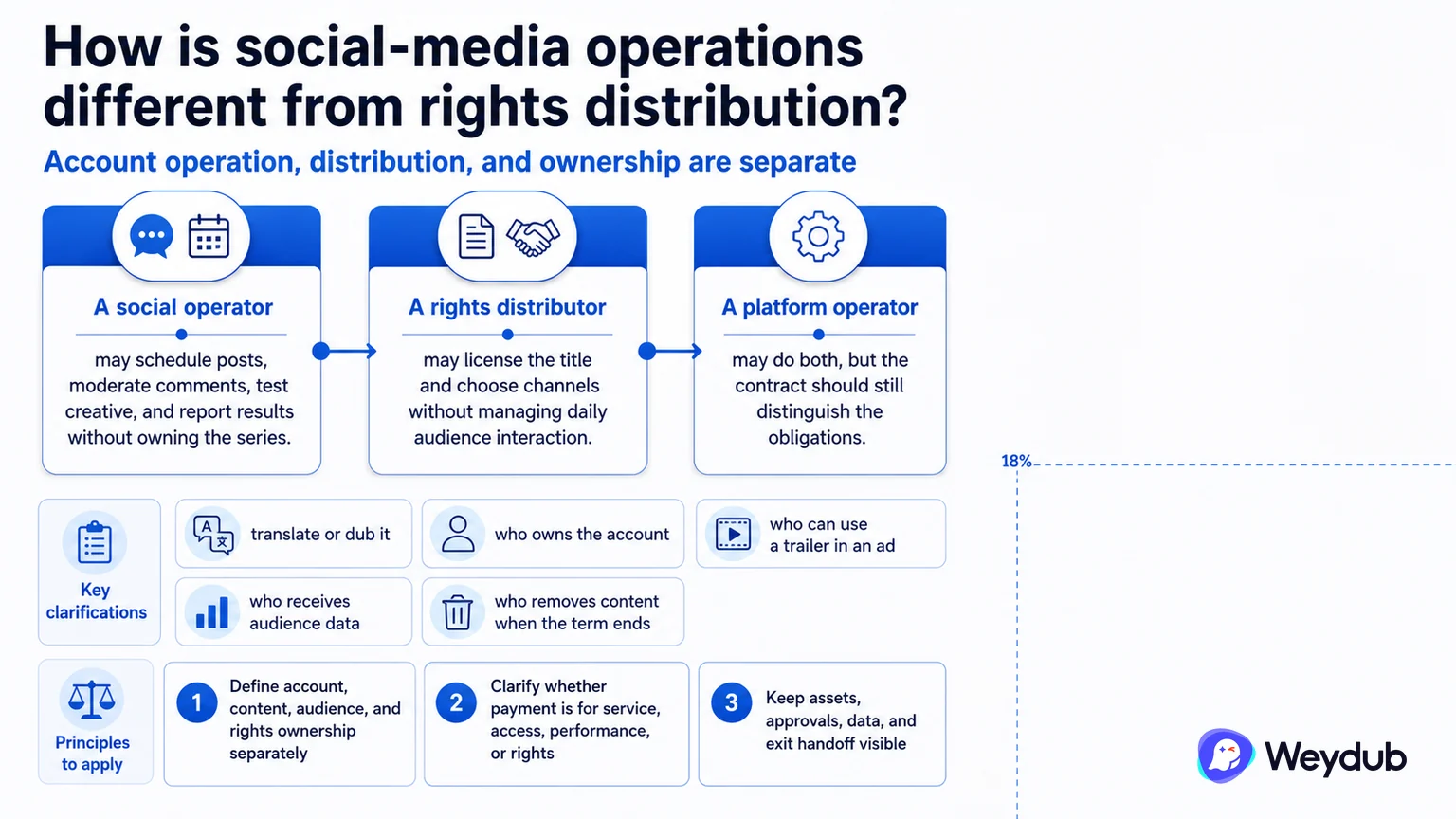
Account operation, distribution, and ownership are separate
A social operator may schedule posts, moderate comments, test creative, and report results without owning the series. A rights distributor may license the title and choose channels without managing daily audience interaction. A platform operator may do both, but the contract should still distinguish the obligations.
The distinction matters when a localized asset is prepared: who may translate or dub it, who owns the account, who can use a trailer in an ad, who receives audience data, and who removes content when the term ends.
- Define account, content, audience, and rights ownership separately.
- Clarify whether payment is for service, access, performance, or rights.
- Keep assets, approvals, data, and exit handoff visible.
Map the partner's actual work
A proposal to help with overseas growth can describe very different services. It may cover posting and moderation, creative testing, paid acquisition, channel licensing, local sales, or a combination. Use actions and deliverables rather than a broad label such as overseas operation.
| Responsibility | Question | Record |
|---|---|---|
| Account | Who controls access and publishing? | Owner, roles, recovery, exit |
| Content | Who can edit, translate, dub, or clip? | Asset scope and approval |
| Audience | Who handles comments and support? | Moderation and escalation |
| Data and money | Who sees reports and receives payment? | Metrics, costs, settlement |
Make the handoff reversible
The agreement should explain what happens to accounts, content, audience data, assets, and live posts when the relationship ends. This is especially important when a partner has created localized versions or controls a channel that the rights owner must continue operating.
- List the partner's actions and deliverables.
- Define rights, account, asset, data, and approval ownership.
- Set reporting and payment rules.
- Agree on content removal and transfer procedures.
- Review the first package before expanding the relationship.
Frequently asked questions
Can a social operator also be a rights distributor?
Yes, but the agreement should separate the service, rights, account, data, and payment obligations.
Who owns a localized trailer made by a social partner?
The agreement and underlying rights determine that. The production handoff should state permitted use and ownership explicitly.
Related theme: Stakeholders, rights, and responsibilities
Weydub workflow
Take the next production step
Keep source, language, review, and delivery boundaries clear as partners and rights scope change.