
Rights checklist
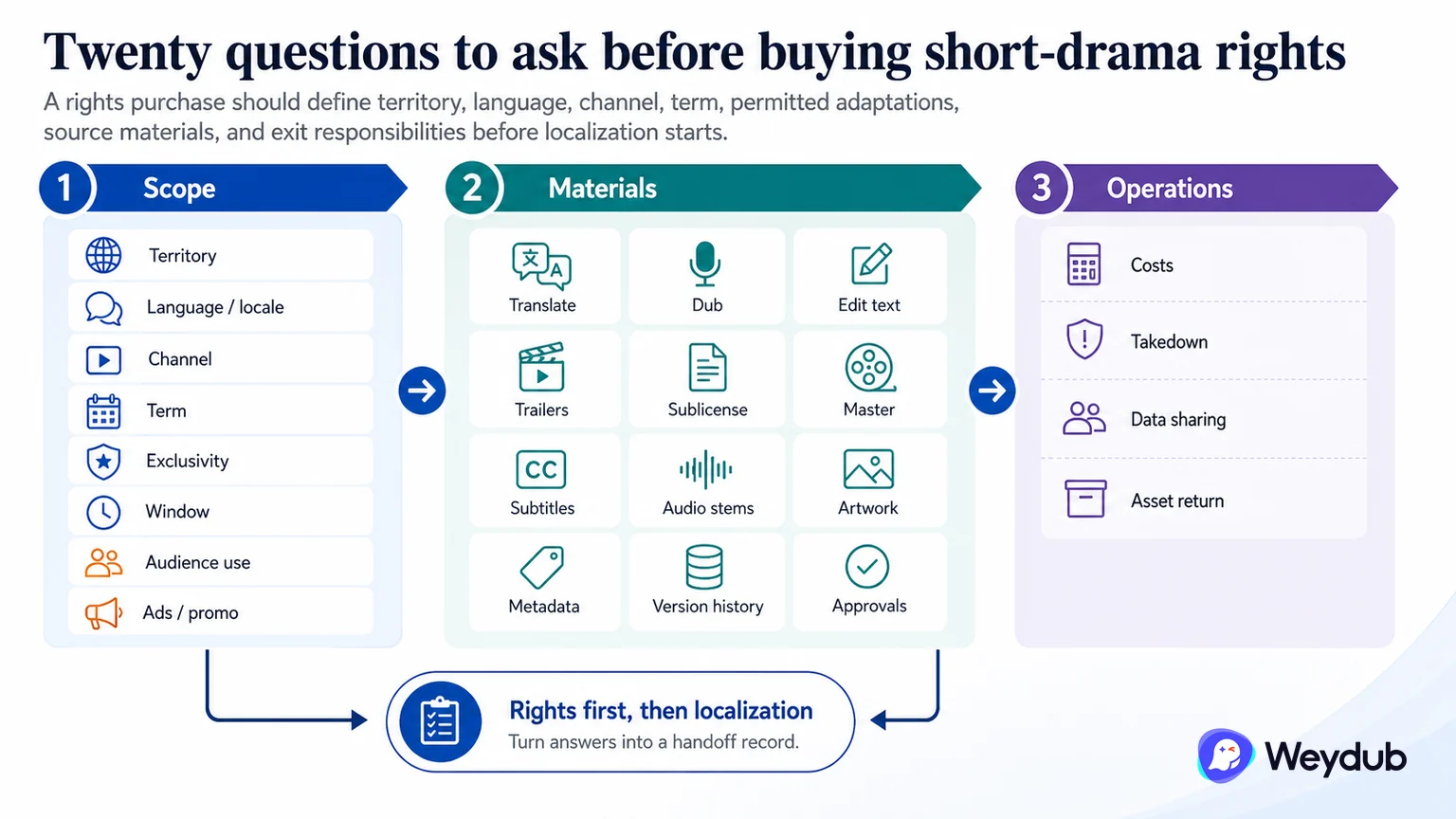
Twenty questions to ask before buying short-drama rights
A rights purchase should define territory, language, channel, term, permitted adaptations, source materials, and exit responsibilities before localization starts.
Key conclusions
- Confirm where, in which language, and on which channels the title may be used.
- Ask for the master, subtitles, audio, artwork, metadata, and version inventory.
- Clarify translation, dubbing, picture editing, marketing, sublicensing, and takedown rights.
The first questions concern scope: territory, language or locale, channel, term, exclusivity, window, audience product, advertising, and promotional use. The contract should also say whether the buyer may translate, dub, edit picture text, create trailers, or sublicense.
The second group concerns materials and acceptance. Ask for clean and subtitled masters, subtitle and script files, audio stems, music and effects, artwork, metadata, episode order, language labels, and version history. A rights permission without a usable source can still create a production gap.
The final group concerns operations: who approves localized versions, who bears platform and localization costs, how claims and takedowns work, what data is shared, and what happens to assets when the term ends. Turn the answers into a handoff record before batch work begins.
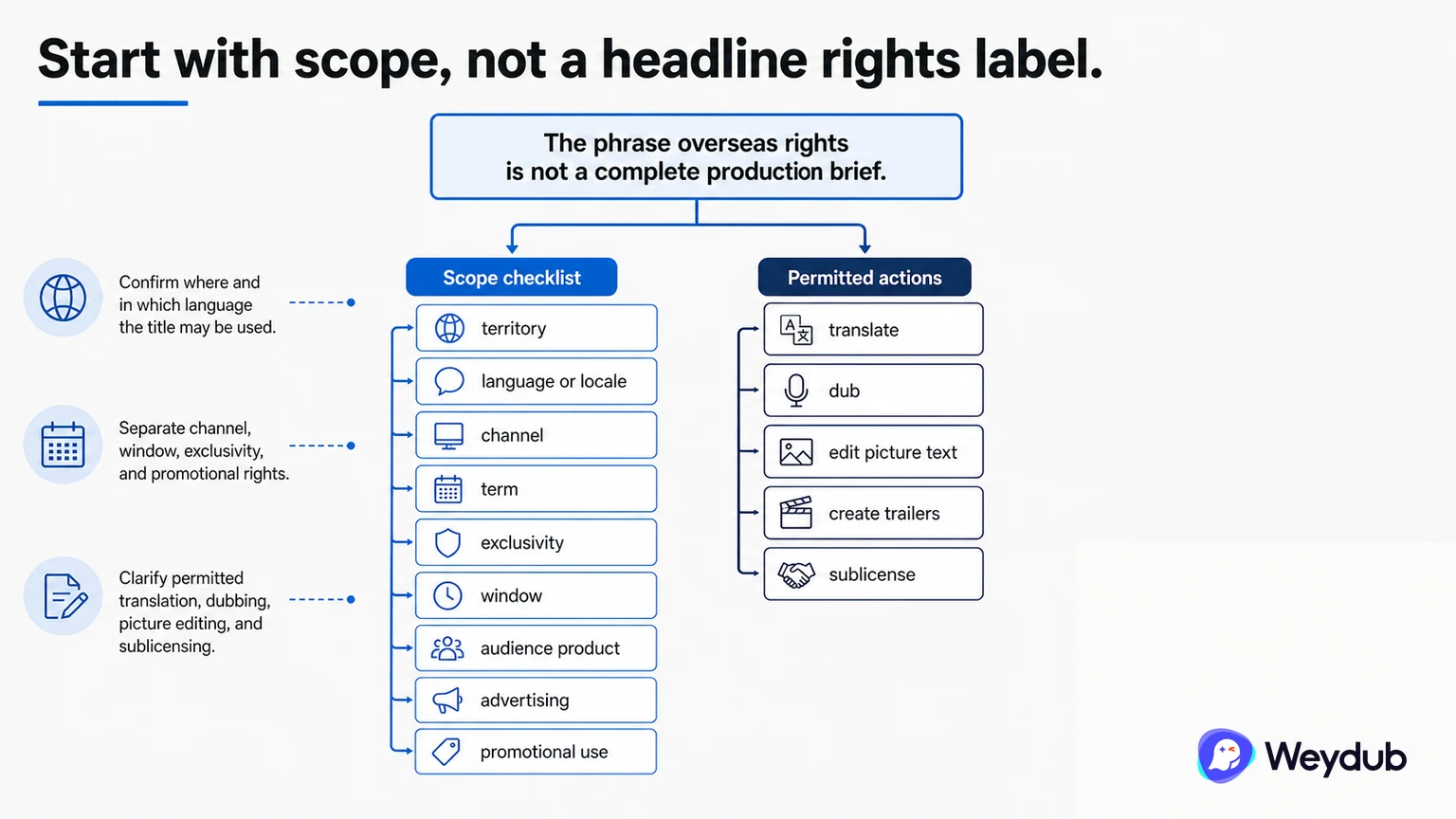
Start with scope, not a headline rights label
A rights purchase should name territory, language or locale, channel, term, exclusivity, window, audience product, advertising, and promotional use. It should also say whether the buyer may translate, dub, edit picture text, create trailers, or sublicense.
The phrase overseas rights is not a complete production brief. A title may be usable on one app but not YouTube, or in one language but not every territory. Scope must survive into the localization and delivery record.
- Confirm where and in which language the title may be used.
- Separate channel, window, exclusivity, and promotional rights.
- Clarify permitted translation, dubbing, picture editing, and sublicensing.
Ask for the materials that make the right usable
Request clean and subtitled masters, subtitle and script files, audio stems, music and effects, artwork, metadata, episode order, language labels, and version history. A permission without a usable source can still create a production gap and an avoidable localization cost.
| Area | Questions | Why it matters |
|---|---|---|
| Rights | Territory, language, channel, term? | Defines authorized release |
| Source | Clean master, subtitles, scripts, audio? | Defines production starting point |
| Versions | Episode order, labels, history? | Prevents wrong or obsolete output |
| Operations | Approval, costs, claims, takedown? | Defines ongoing responsibility |
Turn answers into a release handoff
Before batch work begins, record who approves localized versions, who pays platform and localization costs, how claims and takedowns work, what data is shared, and what happens to assets when the term ends. The checklist should travel with the master and the localized package.
- Confirm rights scope and permitted adaptations.
- Inventory source materials and version history.
- Name approval, cost, claim, data, and takedown owners.
- Test one representative episode and package.
- Approve batch production only after the gaps are resolved.
Frequently asked questions
Is a contract saying worldwide rights enough?
Not necessarily. Language, channel, term, exclusivity, adaptations, promotion, and source materials may still be limited or unclear.
Why ask for a clean master before localization?
It can avoid picture reconstruction, improve quality, and clarify which language, subtitle, and audio outputs are actually needed.
Related theme: Stakeholders, rights, and responsibilities
Weydub workflow
Take the next production step
Keep source, language, review, and delivery boundaries clear as partners and rights scope change.