
Rights economics
Why can one short drama earn more than once?
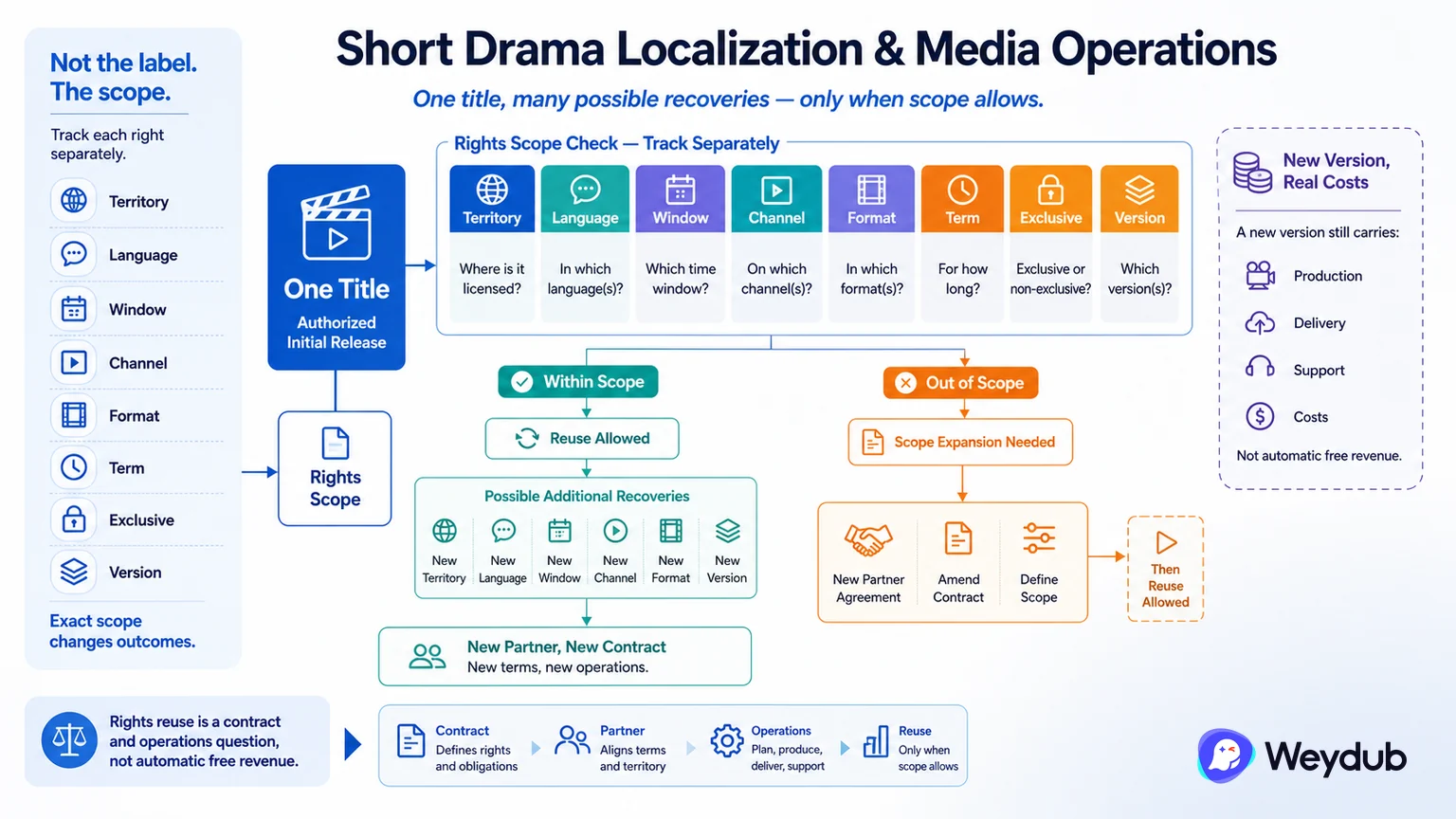
A title can create value through different territories, languages, windows, channels, formats, and partner relationships when the rights permit it.
Key conclusions
- Track territory, language, channel, term, exclusivity, and format separately.
- A new version still carries production, delivery, and support costs.
- Rights reuse is a contract and operations question, not automatic free revenue.
A rights holder may license a title to one market, release another language through an owned product, or work with different channels at different windows. Each route can create a new recovery path, but it also creates a new set of obligations and records.
Localization can make the same master usable in more contexts, especially when characters, terminology, and source assets are managed as reusable series context. It does not remove the cost of translation, voice, picture, review, metadata, platform rules, or support.
Before planning another release, confirm the contract and the version lineage. The team should know which output was authorized, which partner accepted it, and what happens when a source correction must propagate to several markets.
Rights reuse is a contract and operations question
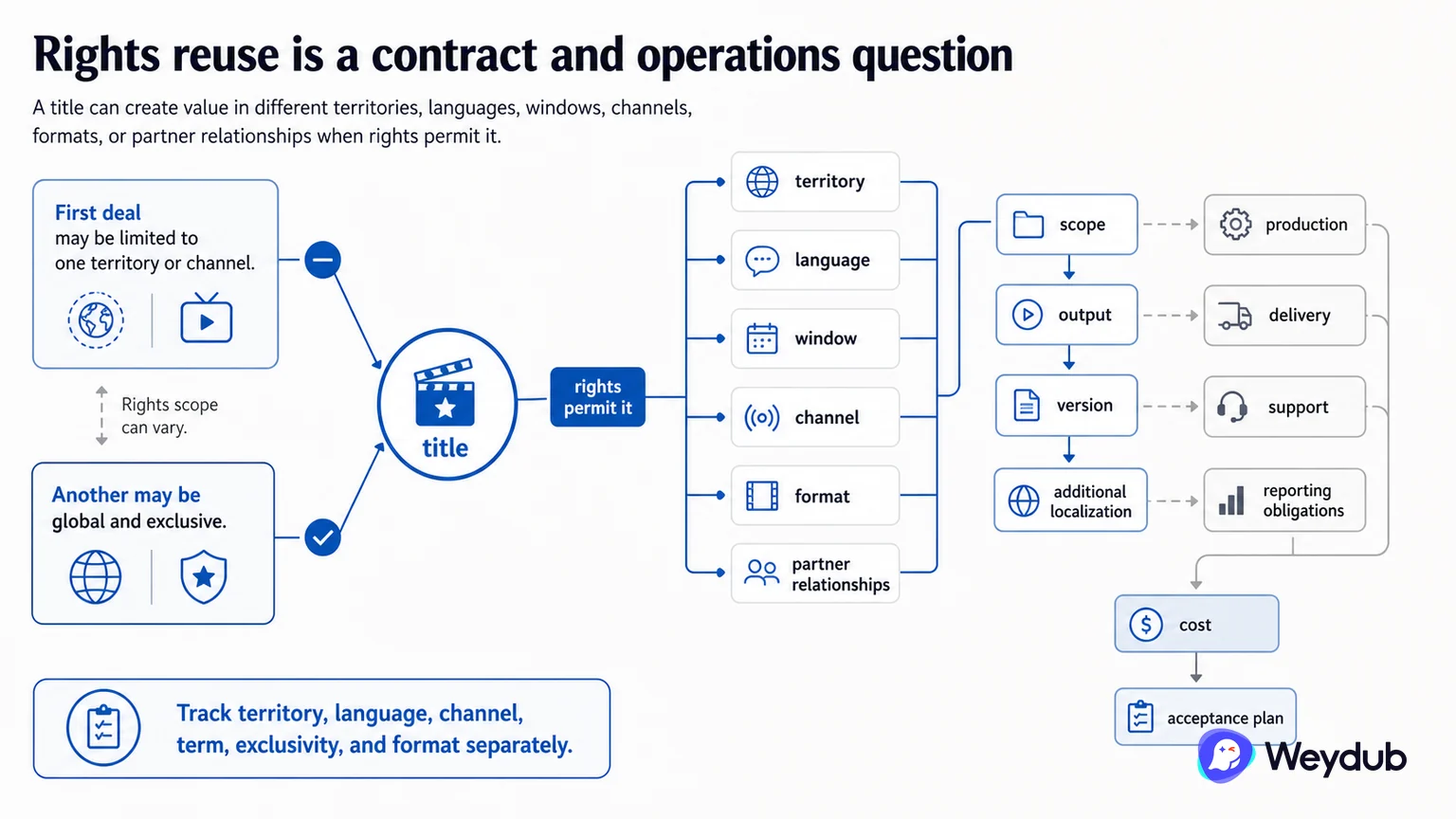
A title may create value in different territories, languages, windows, channels, formats, or partner relationships when the rights permit it. A first deal may be limited to one territory or channel, while another may be global and exclusive. The label alone is not enough; the exact scope matters.
A new language or channel can create a new recovery path, but it also creates new production, delivery, support, and reporting obligations.
- Track territory, language, channel, term, exclusivity, and format separately.
- Record which output and version each agreement authorizes.
- Treat additional localization as a cost and acceptance plan, not free reuse.
Reusable context lowers avoidable rework
Characters, terminology, source assets, clean masters, subtitle decisions, voice mappings, and version lineage can make a title easier to extend. They do not eliminate translation, picture, audio, review, metadata, platform, or support work.
Before planning another release, confirm the contract and the version lineage. The team should know which partner accepted which output and what happens when a source correction must propagate to several markets.
| Rights field | Why it matters for recovery | Operational record |
|---|---|---|
| Territory | Defines where the output may run | Country or region and exceptions |
| Language | Defines permitted localized versions | Locale and target asset |
| Channel | Defines app, social, platform, or partner use | Destination and package |
| Term and exclusivity | Defines timing and conflicts | Window, renewal, restrictions |
Plan each additional release as a new package
A second release should have an explicit audience, channel, rights scope, localization version, review state, delivery package, and reporting owner. This makes value reusable without pretending that the work is costless or that one approval covers every route.
- Read the rights scope and restrictions.
- Select the target territory, language, and channel.
- Reuse approved context and identify new production work.
- Review and deliver the authorized version.
- Reconcile partner acceptance, results, and future propagation scope.
Frequently asked questions
Can a title be sold again after a first deal?
Sometimes, if other territories, languages, channels, windows, or rights remain available. The agreement must be checked before planning the release.
Does localization automatically create new rights value?
No. It can make a title usable in another context, but the right to translate, dub, edit, and publish must be authorized and the work must be delivered and supported.
Related theme: Stakeholders, rights, and responsibilities
Weydub workflow
Take the next production step
Keep source, language, review, and delivery boundaries clear as partners and rights scope change.