
App localization
What localized assets does a short-drama app need?
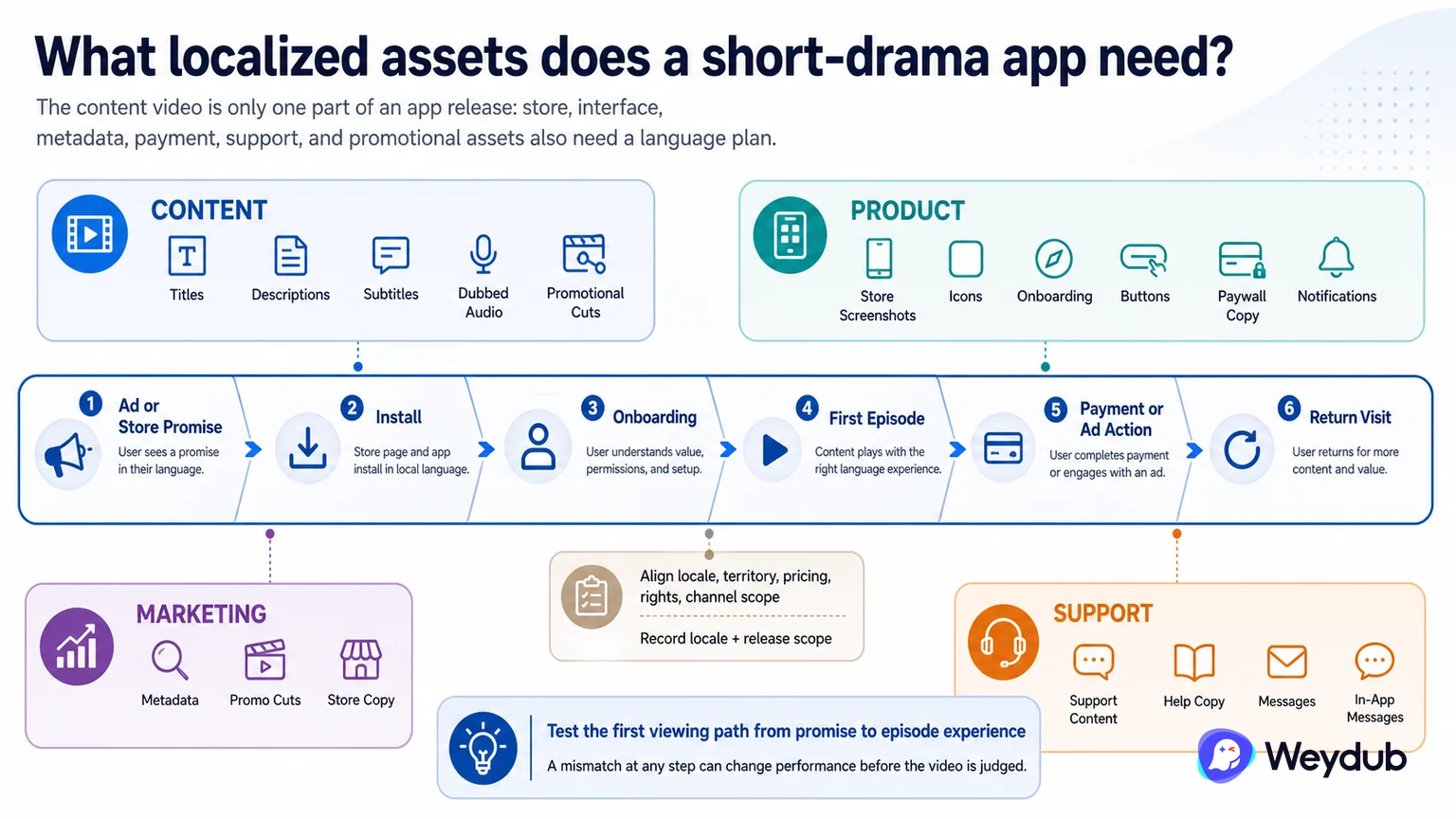
The content video is only one part of an app release: store, interface, metadata, payment, support, and promotional assets also need a language plan.
Key conclusions
- List content, product, marketing, and support assets separately.
- Keep locale, territory, pricing, rights, and channel scope aligned.
- Test the first viewing path from ad or store promise to episode experience.
An app release may need localized titles, descriptions, screenshots, icons, onboarding, buttons, paywall copy, notifications, customer support, subtitles, dubbed audio, and promotional cuts. These assets can be owned by different teams but must tell the same story.
Language is not always one-to-one with territory. Payment display, content rules, cultural references, and support expectations can change by market. Record the locale and release scope instead of treating a translation file as the complete localization.
The strongest test follows the user path: ad or store page, install, onboarding, first episode, payment or ad action, and return visit. A mismatch in any step can affect performance before the video itself is reviewed.
Treat the app release as more than a video
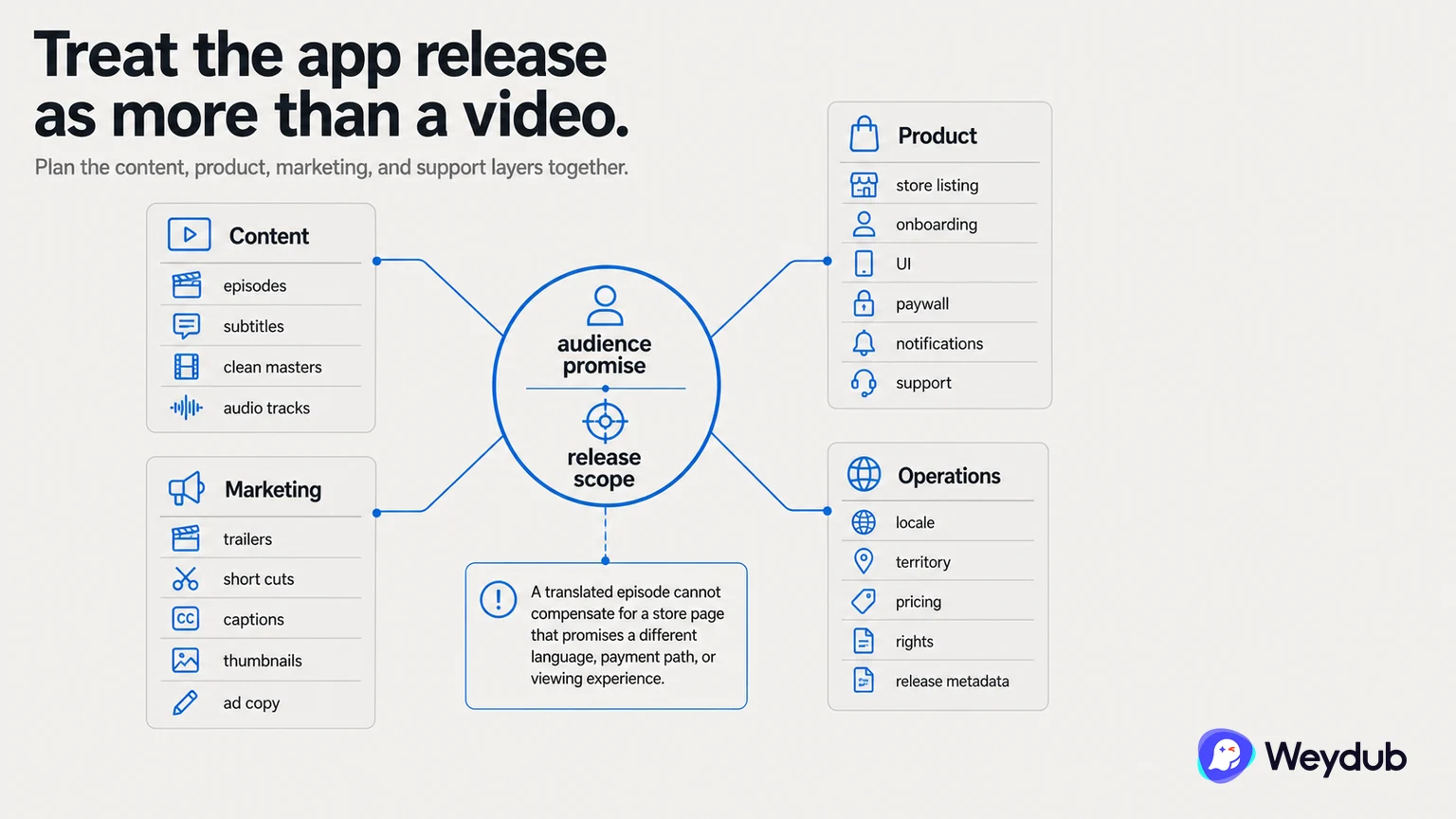
A localized short-drama app may need titles, descriptions, store screenshots, icons, onboarding, buttons, paywall copy, notifications, support content, subtitles, dubbed audio, promotional cuts, and metadata. Different teams may own these assets, but the audience promise and release scope must remain consistent.
A translated episode cannot compensate for a store page that promises a different language, payment path, or viewing experience. Plan the content, product, marketing, and support layers together.
- Content: episodes, subtitles, clean masters, and audio tracks.
- Product: store listing, onboarding, UI, paywall, notifications, and support.
- Marketing: trailers, short cuts, captions, thumbnails, and ad copy.
- Operations: locale, territory, pricing, rights, and release metadata.
Keep locale, territory, and payment decisions separate
A target language does not define every market decision. Regional wording, payment display, content policy, support expectations, rights windows, and platform packaging can differ even when the language is shared.
The release brief should name the audience locale, territory, channel, pricing or payment display, rights scope, and content version. This prevents a language file from being mistaken for a complete market launch.
- Name the locale and territory separately.
- Align price, payment, rights, and content availability with the release scope.
- Keep app copy and episode language consistent without assuming they are identical translations.
Test the first viewing path end to end
The strongest check follows the audience from ad or store page through install, onboarding, first episode, payment or ad action, and return visit. A mismatch at any step can affect activation and trust before the video itself is reviewed.
Use representative scenes and real device or channel conditions for subtitle density, audio, text in the picture, and playback. Record which locales, territories, and app versions were tested so the result is not overgeneralized.
- Review store and acquisition promise.
- Install and complete localized onboarding.
- Open the first episode and verify subtitles, audio, and metadata.
- Test payment or ad-supported continuation where applicable.
- Check return paths, support, and version state.
Frequently asked questions
Is translating the app store listing enough for app localization?
No. The viewing path also includes interface, onboarding, payment or ads, episodes, subtitles, audio, support, and promotional assets.
Can one Portuguese or Spanish version cover every territory?
Not automatically. Language, locale, territory, rights, channel, pricing, and cultural review should be stated separately.
Related theme: Distribution and delivery
Weydub workflow
Take the next production step
Prepare a localized version with subtitles, voice, timing, and a delivery path that matches the destination.