
Library operations
What changes when a team moves from delivering one drama to managing a content library?
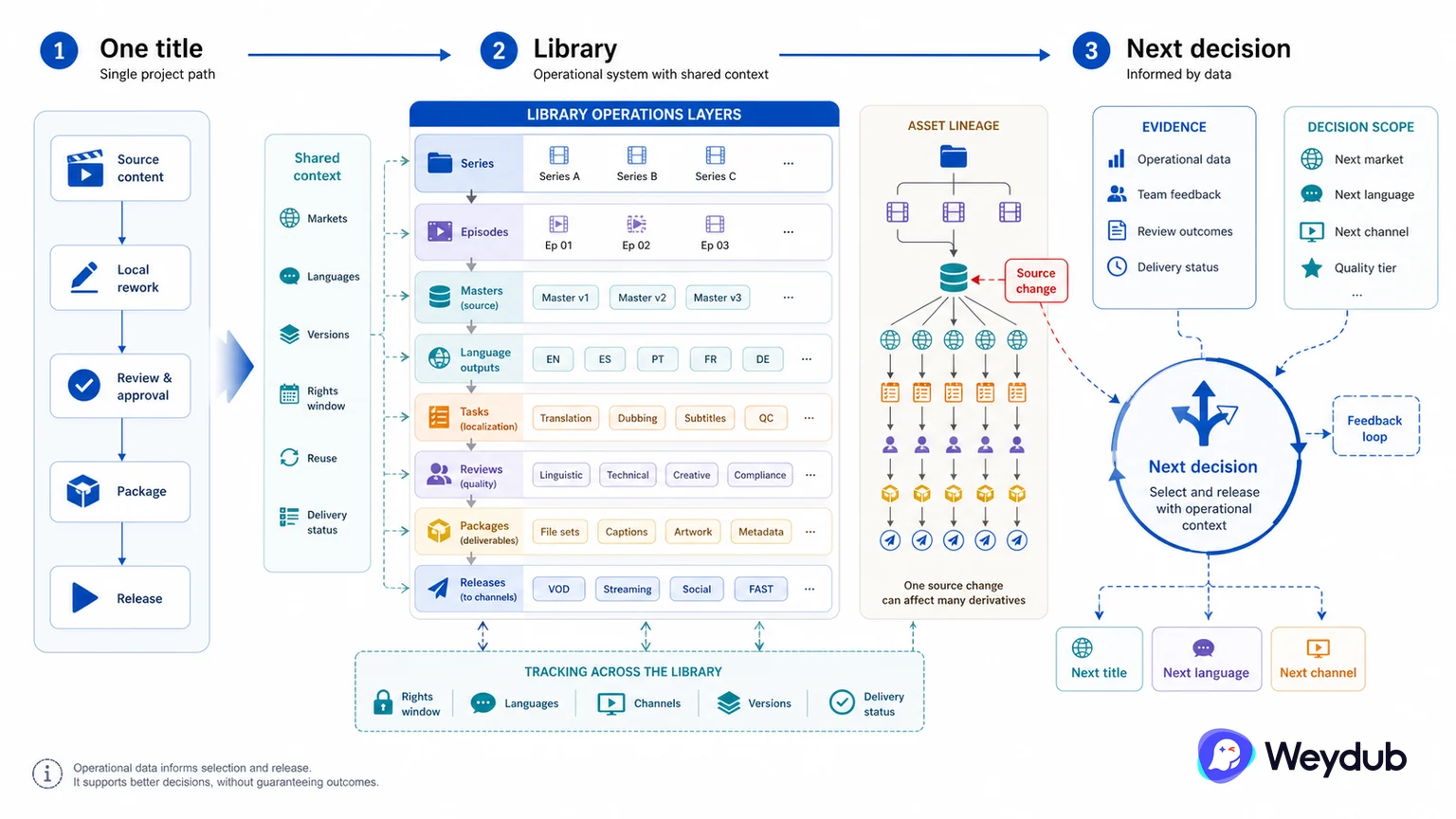
A library needs asset lineage, rights and window tracking, reusable language context, version control, and data that feeds the next content decision.
Key conclusions
- Treat series assets as reusable production context, not only archived files.
- Track rights, languages, channels, versions, and delivery status across the library.
- Use operational data to inform selection and release without turning a metric into a guarantee.
One title can be managed through a project plan. A library introduces repeated decisions: which titles are available in which markets, which languages are complete, which versions are approved, which rights windows are ending, and which assets can be reused safely.
The operating model needs a common vocabulary for series, episodes, masters, language outputs, tasks, reviews, packages, and releases. It also needs a way to isolate local rework while showing when a source change affects many derivatives.
Library data is valuable when it helps choose the next title, language, channel, or quality tier. It should explain a decision and its scope, not become a public claim detached from the underlying evidence.
A library creates repeated operational decisions
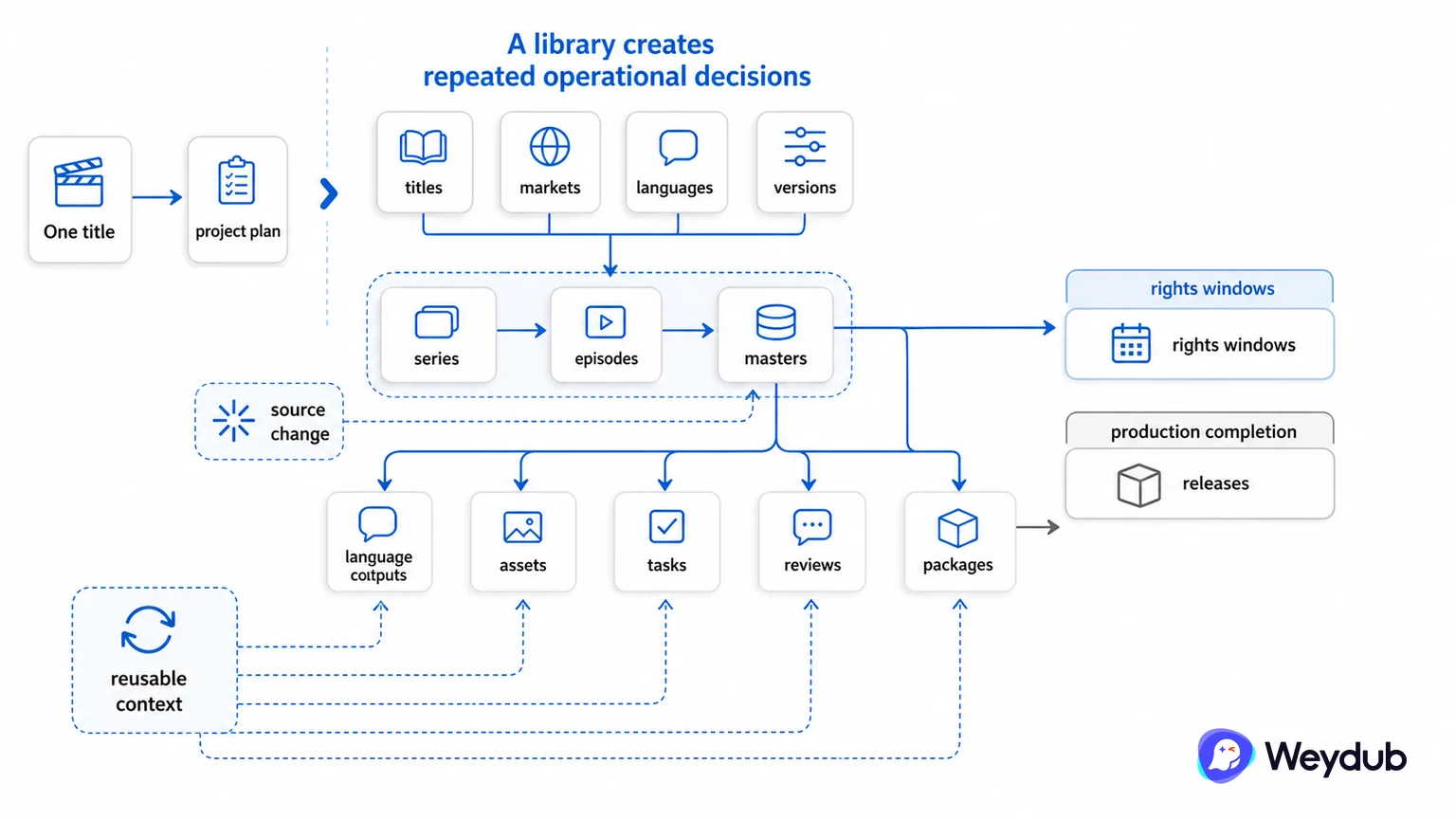
One title can be managed through a project plan. A library introduces repeated questions: which titles are available in which markets, which languages are complete, which versions are approved, which rights windows are ending, and which assets can be reused safely.
The operating model needs a shared vocabulary for series, episodes, masters, language outputs, tasks, reviews, packages, and releases. It also needs to isolate local rework while showing when a source change affects many derivatives.
- Track title, episode, master, language, version, and release state.
- Separate rights windows from production completion.
- Keep reusable context linked to the outputs that depend on it.
Use library data to make the next decision
Library data is valuable when it helps choose the next title, language, channel, or quality tier. A metric should explain a decision and its scope, not become a public claim detached from the evidence behind it.
A library view should answer both operational and editorial questions: what can ship, what is blocked, what can be extended, and where a correction would propagate.
| Library view | Question | Useful state |
|---|---|---|
| Rights | Where and when can it run? | Territory, language, channel, term |
| Production | What has been created? | Master, tasks, outputs, exceptions |
| Quality | What is approved? | Review, version, unresolved defects |
| Delivery | What can ship now? | Package, metadata, destination, acceptance |
Build the library from traceable objects
Start with a common object model and version relationship, then add reporting that supports real decisions. The aim is not to archive every intermediate file forever; it is to preserve enough lineage to extend, review, deliver, and explain the next release.
- Define series, episode, master, language, and version objects.
- Attach rights, assets, tasks, review, and delivery state.
- Create views for blocked, approved, expiring, and reusable work.
- Measure release outcomes in their exact scope.
- Feed findings into selection and production policy.
Frequently asked questions
Is a content library just a larger folder?
No. A library needs shared object definitions, rights and version state, reusable context, delivery status, and data that supports decisions.
Should every intermediate file be kept forever?
Not necessarily. Keep the assets and relationships needed for traceability, approved reuse, correction, delivery, and contractual requirements.
Related theme: Industry observations
Weydub workflow
Take the next production step
Apply the decision framework to a repeatable localization workflow with visible assets, tasks, and handoffs.