
Partnership structure
What is the difference between a distributor and a licensing partner?
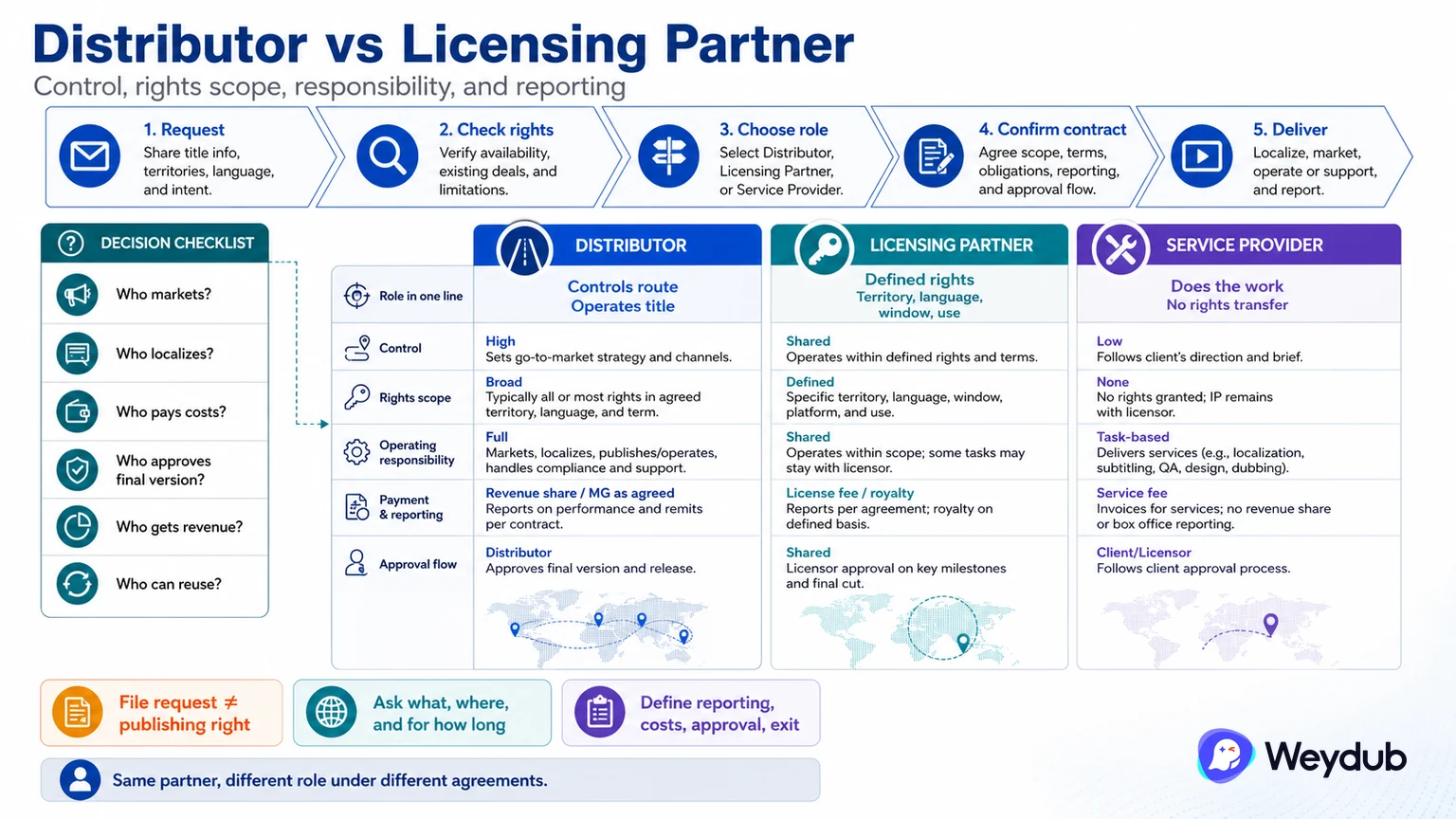
The difference is usually in control, rights scope, operating responsibility, and how the partner is paid and reported.
Key conclusions
- Ask what the partner is authorized to do and where.
- Separate a service or distribution role from a rights transfer.
- Define reporting, costs, version approval, and exit terms before delivery.
A distributor may acquire or control a release route and operate the title through its channels. A licensing partner may receive a defined right for a territory, language, window, or use while the original owner retains other rights. A service provider may do the work without receiving either role.
The same partner can occupy different positions under different agreements. The contract should therefore answer who markets, who localizes, who pays platform costs, who approves the final version, who receives revenue, and who can reuse the package elsewhere.
Localization teams need this clarity because a file request can imply very different permissions. Delivering a subtitle or dubbed master is not the same as granting the right to publish it.
Ask what the partner is authorized to do
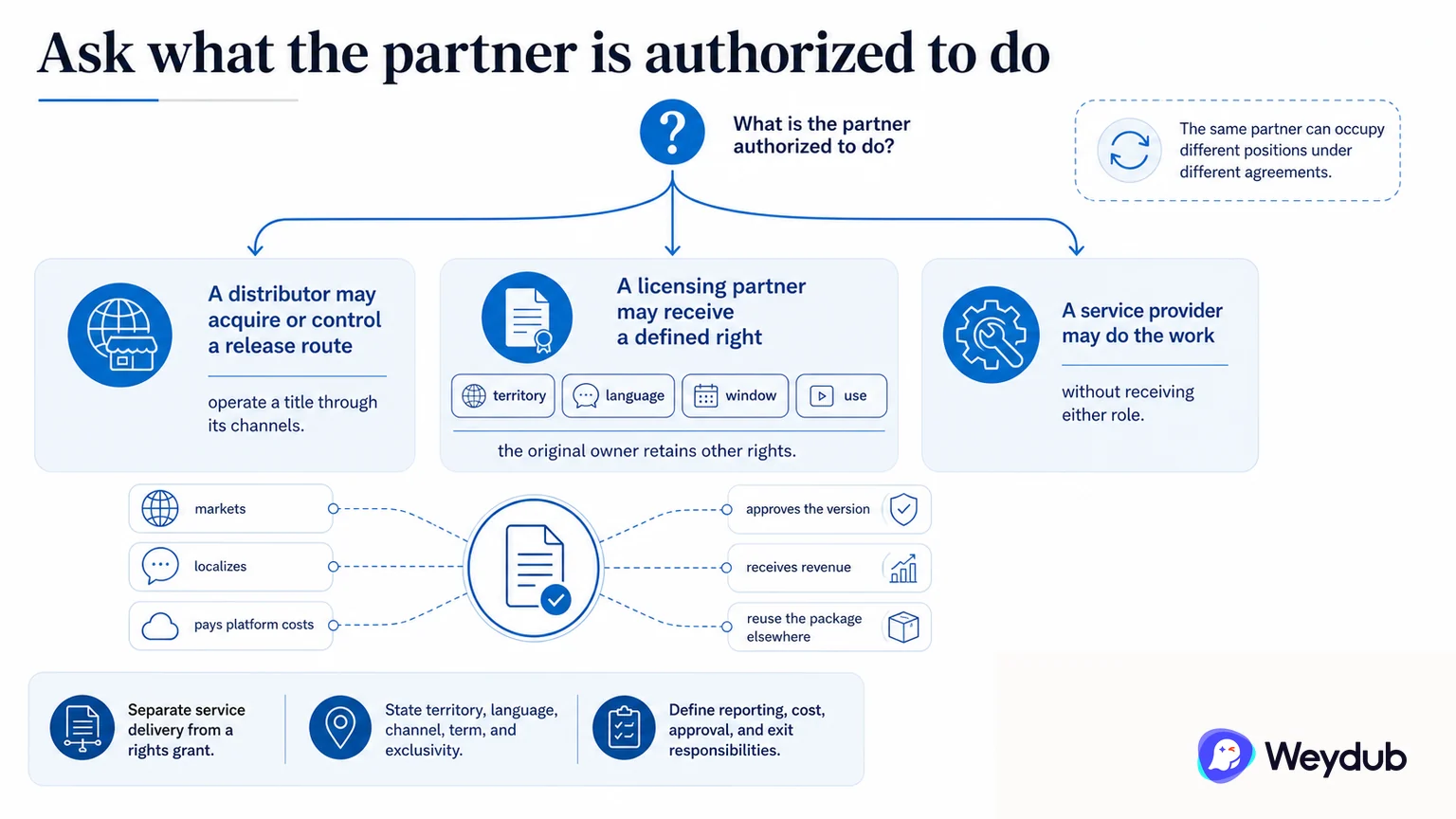
A distributor may acquire or control a release route and operate a title through its channels. A licensing partner may receive a defined right for a territory, language, window, or use while the original owner retains other rights. A service provider may do the work without receiving either role.
The same partner can occupy different positions under different agreements. The contract should answer who markets, localizes, pays platform costs, approves the version, receives revenue, and can reuse the package elsewhere.
- Separate service delivery from a rights grant.
- State territory, language, channel, term, and exclusivity.
- Define reporting, cost, approval, and exit responsibilities.
A file request can imply different permissions
Delivering a subtitle or dubbed master is not the same as granting the right to publish it. Localization teams should know whether the partner may edit, advertise, sublicense, create clips, change metadata, or use the output after the term ends.
The package should carry the approved version and rights scope so a technically complete file is not released outside its authorization.
| Partner role | Control | Questions before delivery |
|---|---|---|
| Service provider | Performs defined work | Who owns source and output? |
| Distributor | Operates a release route | Which channels and territories? |
| Licensee | Receives defined use rights | What term, language, and exclusivity? |
| Hybrid partner | May combine roles | Which obligation belongs to which agreement? |
Write the operating model before batch work
A short agreement summary can prevent a long handoff dispute. Attach rights scope, version approval, reporting, costs, asset access, data, takedown, and end-of-term behavior to the project record.
- Identify the partner role and authority.
- Confirm rights and permitted adaptations.
- Define source, localization, acceptance, and delivery owners.
- Set reporting, cost, data, and takedown rules.
- Deliver only the approved version within scope.
Frequently asked questions
Is a licensing partner the same as a distributor?
Not always. A license may define a limited right while a distributor may operate a release route; the agreement determines the actual role.
Does sending a file grant permission to publish it?
No. File access and publication rights are separate questions.
Related theme: Stakeholders, rights, and responsibilities
Weydub workflow
Take the next production step
Keep source, language, review, and delivery boundaries clear as partners and rights scope change.