
Channel strategy
Why does distribution shape rights and localization quality?
Where a series will be watched affects the rights scope, package, language depth, review bar, and investment the project can justify.
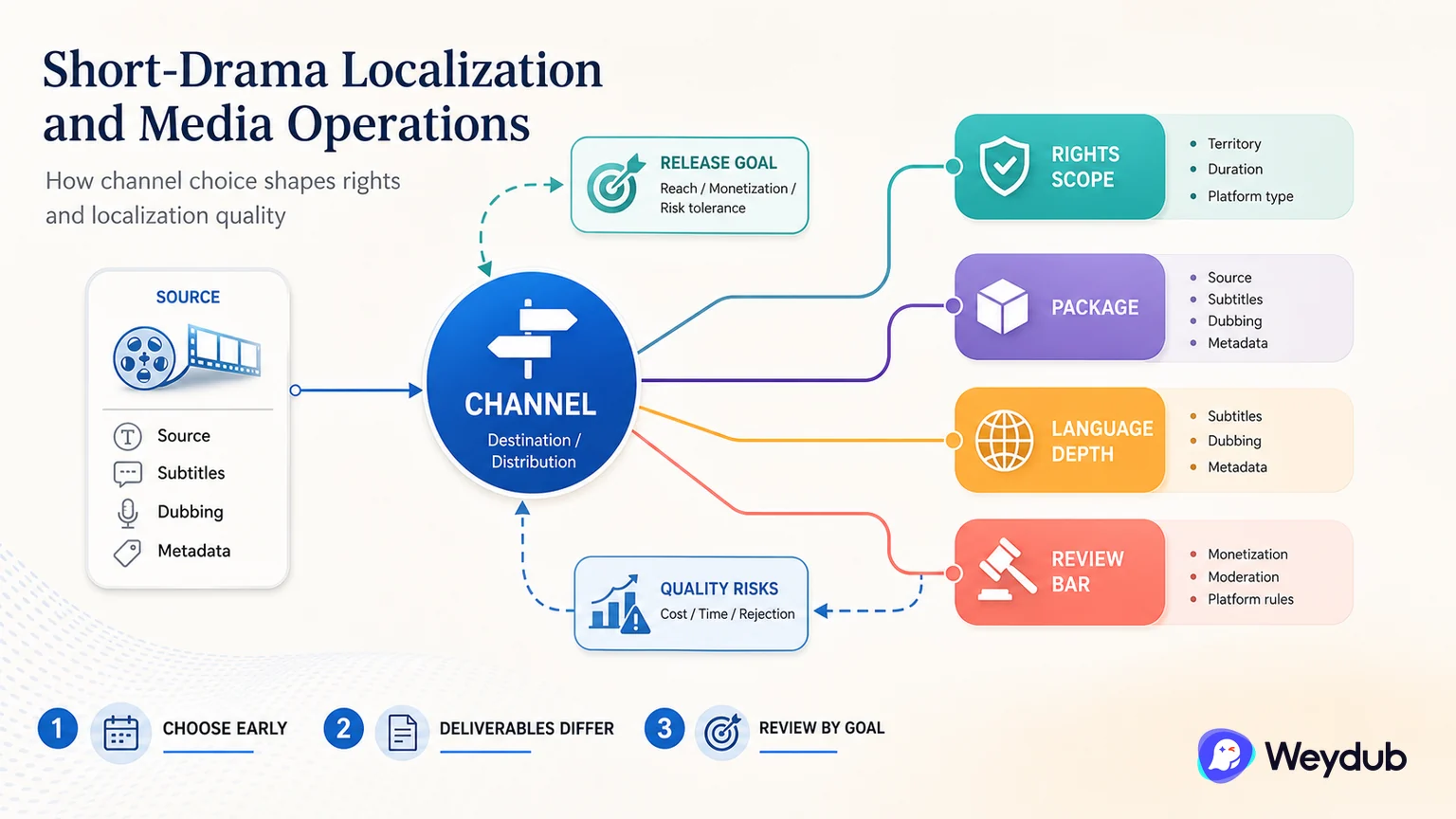
Key conclusions
- Choose the channel early enough to inform rights and package requirements.
- Do not treat subtitles, dubbing, and metadata as interchangeable deliverables.
- Use the release goal to decide which quality risks deserve deeper review.
A channel is more than an upload destination. It determines how viewers enter, how the platform handles text and audio, how content is monetized, what metadata is required, and what rights or moderation rules apply.
A subtitle-first test may be sensible for a market-learning release, while an audio-first app audience may justify dubbing earlier. A licensing partner may require a clean master and separate tracks even if a social channel could accept burned-in text. These are production decisions, not final formatting details.
Writing the channel and release goal into the project brief helps the team buy the right rights, choose a workable source, and review the version that will actually be delivered.
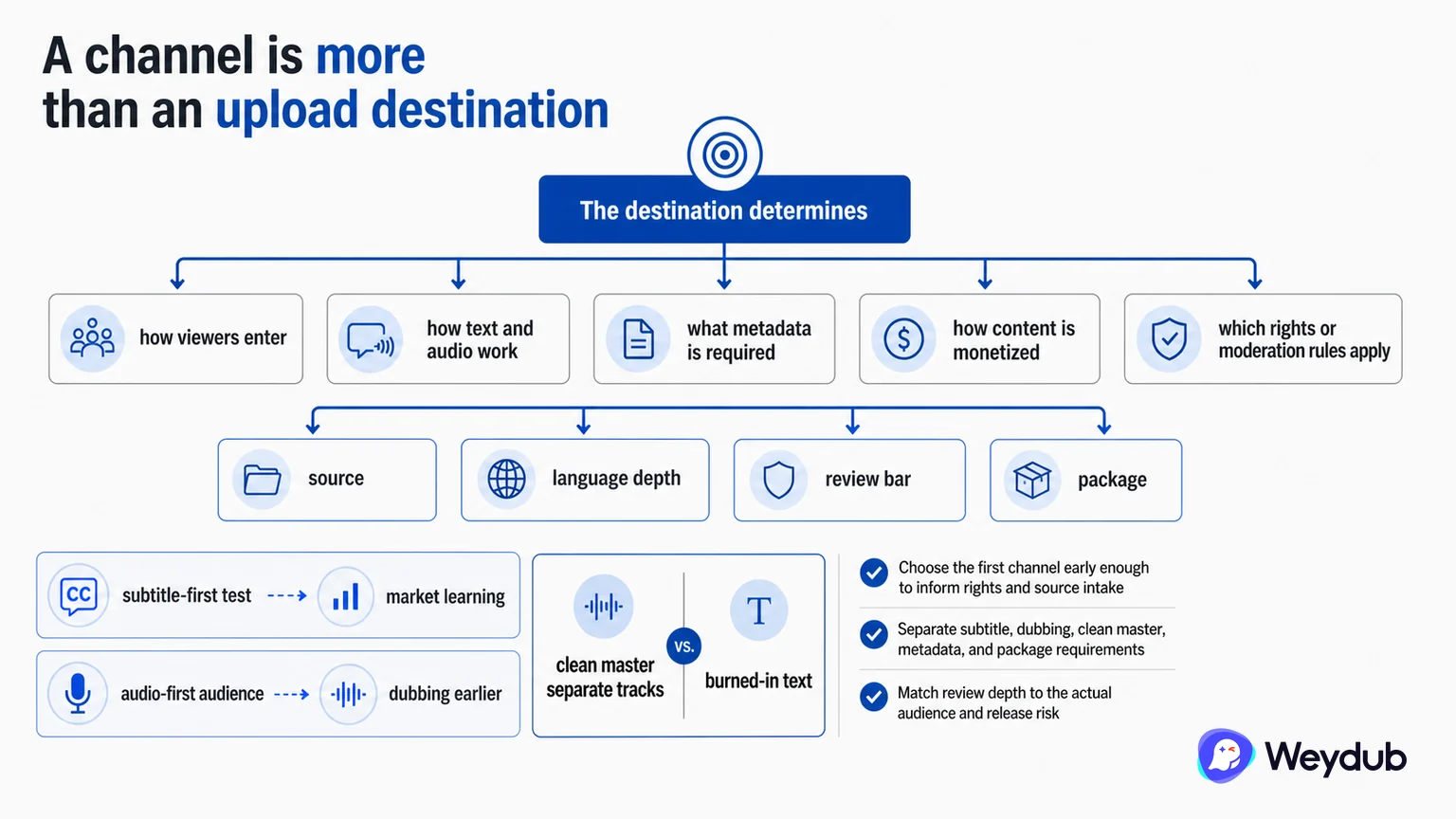
A channel is more than an upload destination
The destination determines how viewers enter, how text and audio work, what metadata is required, how content is monetized, and which rights or moderation rules apply. Those conditions affect the source, language depth, review bar, and package from the start.
A subtitle-first test may be sensible for market learning, while an audio-first audience may justify dubbing earlier. A partner may require a clean master and separate tracks even if a social channel accepts burned-in text.
- Choose the first channel early enough to inform rights and source intake.
- Separate subtitle, dubbing, clean master, metadata, and package requirements.
- Match review depth to the actual audience and release risk.
The release goal determines quality priorities
A high-visibility close-up may need deeper voice and picture review than a temporary discovery clip. A licensed platform package may require assets that an owned social post does not. The project brief should name what success means and which defects would block that outcome.
| Release context | Likely priority | Required evidence |
|---|---|---|
| Market-learning sample | Speed and clear signal | Representative language and channel test |
| Owned app | Continuation, payment, consistency | Product and multi-episode package |
| YouTube or social | Discovery and library handoff | Cut, captions, metadata, rights |
| Licensed partner | Acceptance and contract scope | Master, tracks, captions, metadata, rights |
Write channel requirements into the production brief
Stating the channel and release goal early helps the team buy the right rights, choose a workable source, select subtitles or dubbing, and review the version that will actually be delivered. It also reduces late changes that force an unnecessary full-chain rebuild.
- Name audience, territory, channel, and rights window.
- Define the required language and version depth.
- List technical, metadata, audio, picture, and review requirements.
- Test the representative package before batch production.
- Keep the approved release brief linked to the delivered version.
Frequently asked questions
Should localization be completed before choosing a channel?
Usually no. Channel, rights, audience, and package requirements should shape the localization plan early enough to avoid producing an unusable version.
Does a social-ready export satisfy a licensing partner?
Not necessarily. A partner may require clean masters, separate tracks, captions, metadata, rights proof, and technical acceptance.
Related theme: Short-drama globalization
Weydub workflow
Take the next production step
Move from a market and source decision to a reviewable multi-episode localization workflow.