
Stakeholder map
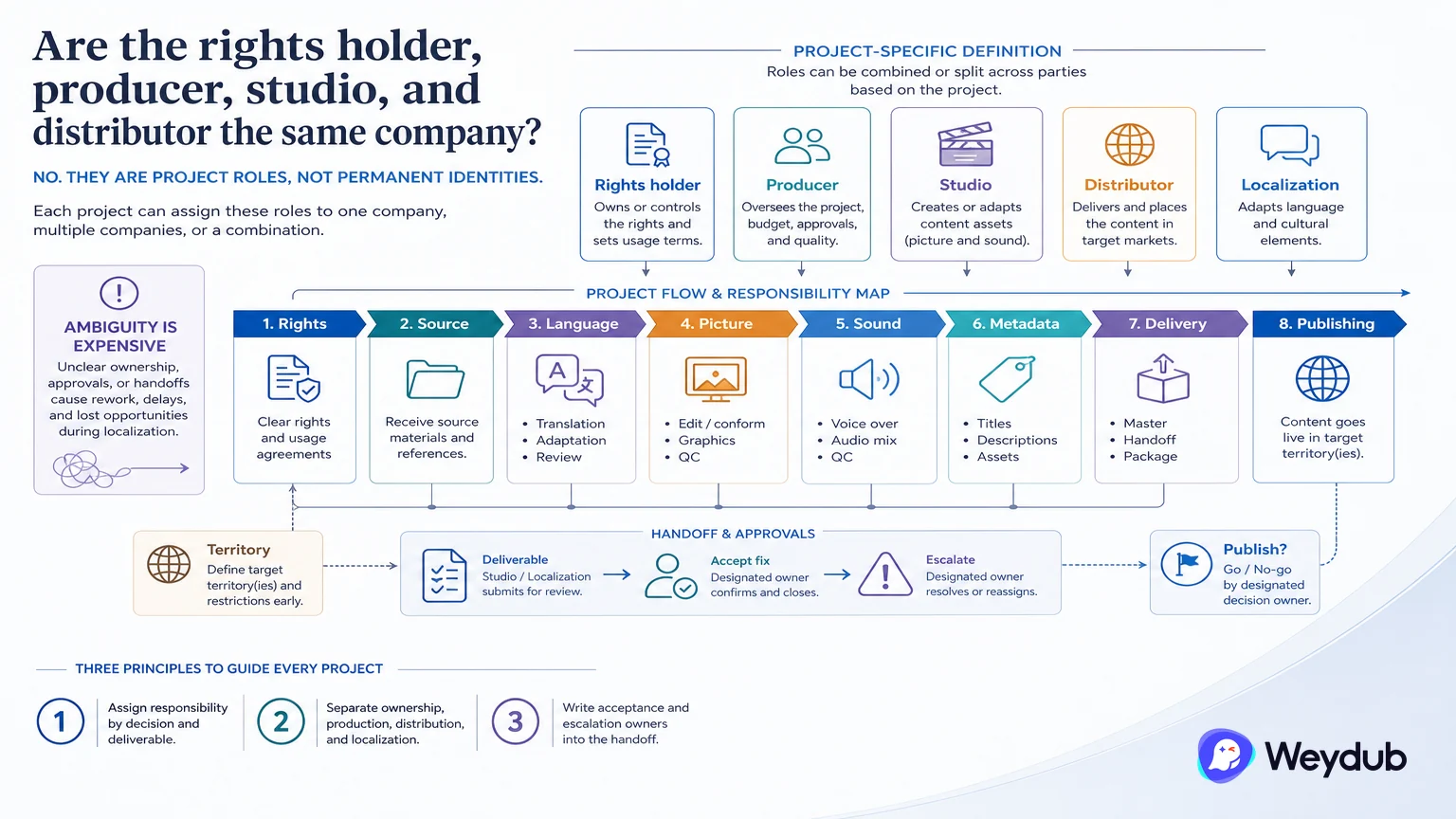
Are the rights holder, producer, studio, and distributor the same company?
A label describes a role in a project, not necessarily a permanent company identity.
Key conclusions
- Assign responsibility by decision and deliverable, not by shorthand labels.
- Separate ownership, production, distribution, and localization duties.
- Write acceptance and escalation owners into the project handoff.
One company can commission a series, own its rights, produce it, distribute it, and operate the audience product. Another project may split all of those responsibilities among several parties. The words rights holder, producer, studio, and distributor therefore need a project-specific definition.
Ambiguity becomes expensive during localization. Someone must be able to authorize a territory and language, supply a usable master, approve a translation, accept the audio mix, and decide whether a version can be published. Those decisions may belong to different people even inside one company.
A responsibility map should follow the work: rights, source, language, picture, sound, metadata, delivery, and publishing. It should also record who receives a defect and who can approve the fix.
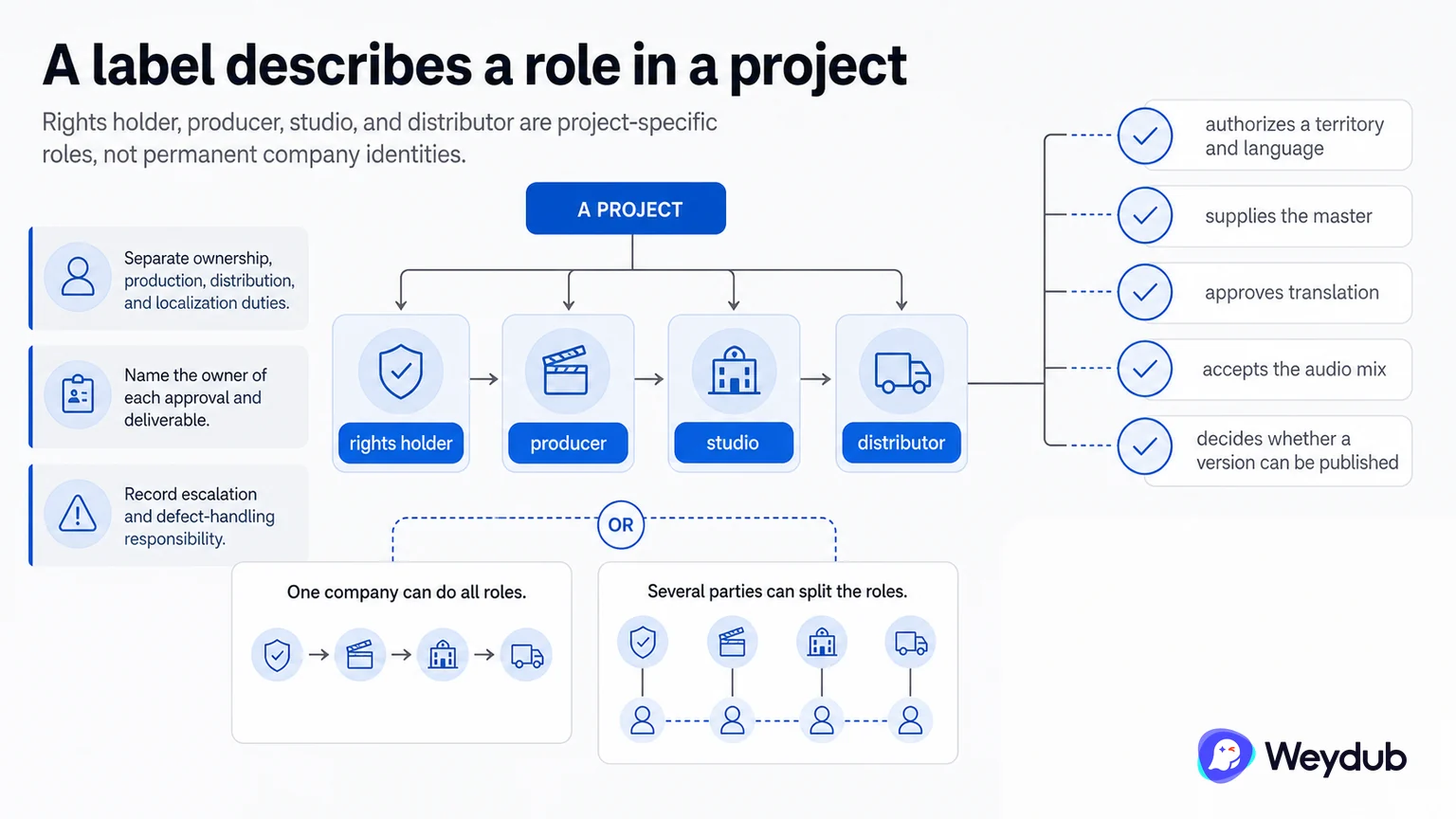
A label describes a role in a project
One company can commission a series, own its rights, produce it, distribute it, and operate the audience product. Another project may split those responsibilities across several parties. Rights holder, producer, studio, and distributor therefore need a project-specific definition.
The useful map follows decisions: who authorizes a territory and language, supplies the master, approves translation, accepts the audio mix, and decides whether a version can be published.
- Separate ownership, production, distribution, and localization duties.
- Name the owner of each approval and deliverable.
- Record escalation and defect-handling responsibility.
Ambiguity becomes expensive during localization
A file handoff can hide several unanswered questions. Possession of a video does not prove the right to translate, dub, edit picture text, advertise, sublicense, or publish it in a specific territory. Those permissions may belong to different parties.
A responsibility map should follow rights, source, language, picture, sound, metadata, delivery, and publishing. It should identify who receives a defect and who can approve the fix.
| Decision | Possible owner | Evidence to record |
|---|---|---|
| Rights scope | Rights holder or licensee | Territory, language, channel, term |
| Source | Producer or studio | Master, episode order, assets |
| Localization | Studio, vendor, or team | Translation, picture, voice, review |
| Release | Distributor or product owner | Package, acceptance, publishing |
Turn roles into a handoff record
Use names, not only company labels, for acceptance and escalation. The record should survive a change in supplier and make clear which version was approved, by whom, for which audience and channel.
- List parties and their project roles.
- Map each right, source, task, and deliverable.
- Assign review and acceptance owners.
- Record exceptions and escalation paths.
- Attach the map to the version and delivery package.
Frequently asked questions
Can one company be both rights holder and distributor?
Yes. The roles can be combined, but the project should still state which responsibilities and permissions apply.
Does a distributor automatically own the localized output?
Not necessarily. Ownership and permitted use depend on the agreement, territory, language, term, and deliverable scope.
Related theme: Stakeholders, rights, and responsibilities
Weydub workflow
Take the next production step
Keep source, language, review, and delivery boundaries clear as partners and rights scope change.