
Security and governance
What should teams check before uploading commercial video to an AI tool?
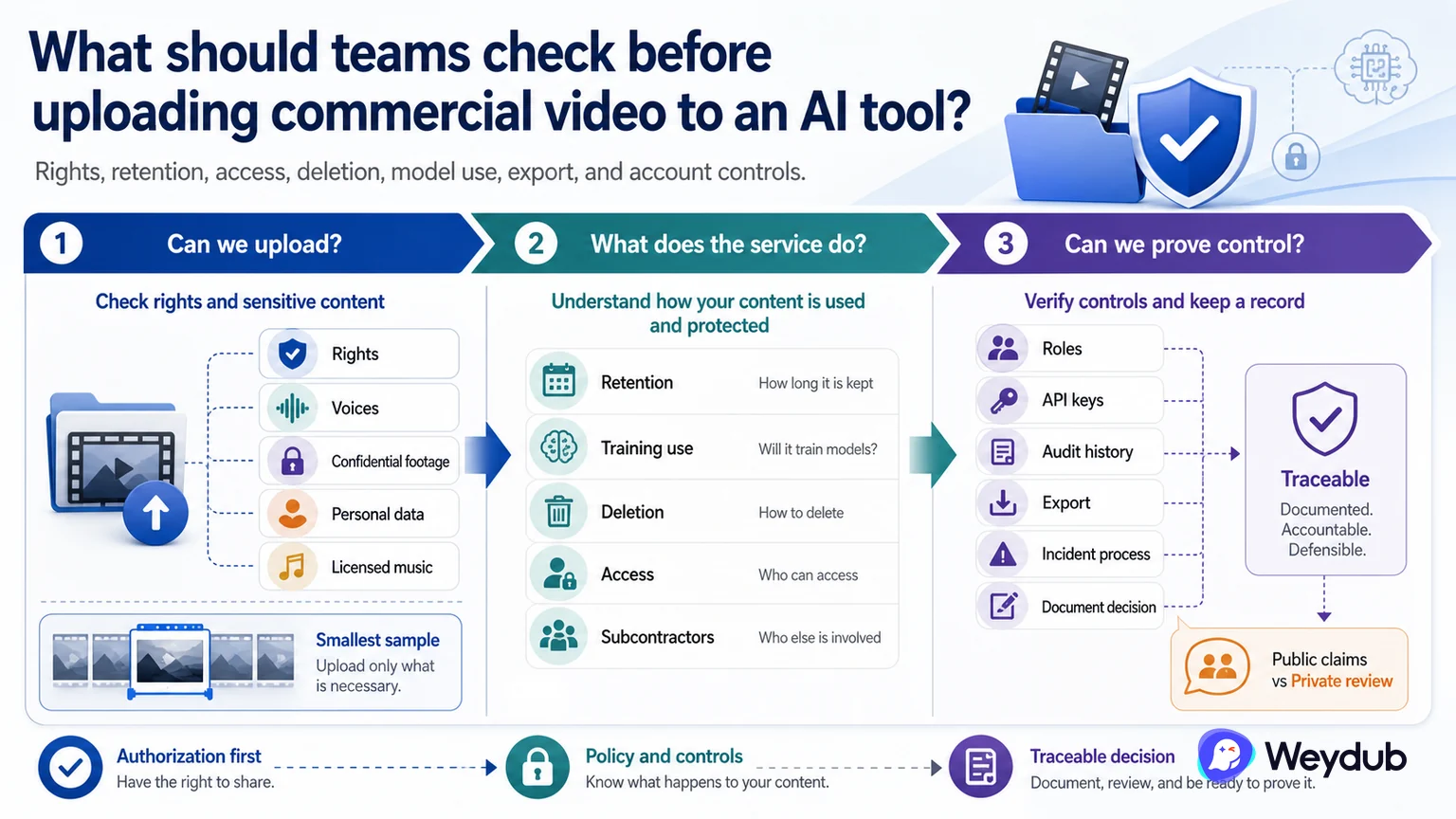
Source rights, retention, access, deletion, model-use policy, export, and account controls matter before a commercial asset enters a processing service.
Key conclusions
- Confirm the uploader has the right to process the media and voices.
- Read retention, training-use, deletion, access, and subcontractor terms.
- Limit account access and keep outputs, logs, and deletion decisions traceable.
Security begins with authorization. A team should know whether the source includes confidential footage, personal data, likeness, music, client material, or restricted territory content, and whether the contract permits processing by the selected service.
Then check operational controls: encryption and access, retention period, model-training use, deletion request, export, account roles, audit history, API keys, and incident process. A convenient upload flow does not answer these questions by itself.
Use the smallest necessary sample for evaluation, document the decision, and separate public product claims from the private security assessment. Sensitive credentials and agreements should never be placed in public content or source metadata.
Check the source rights before uploading
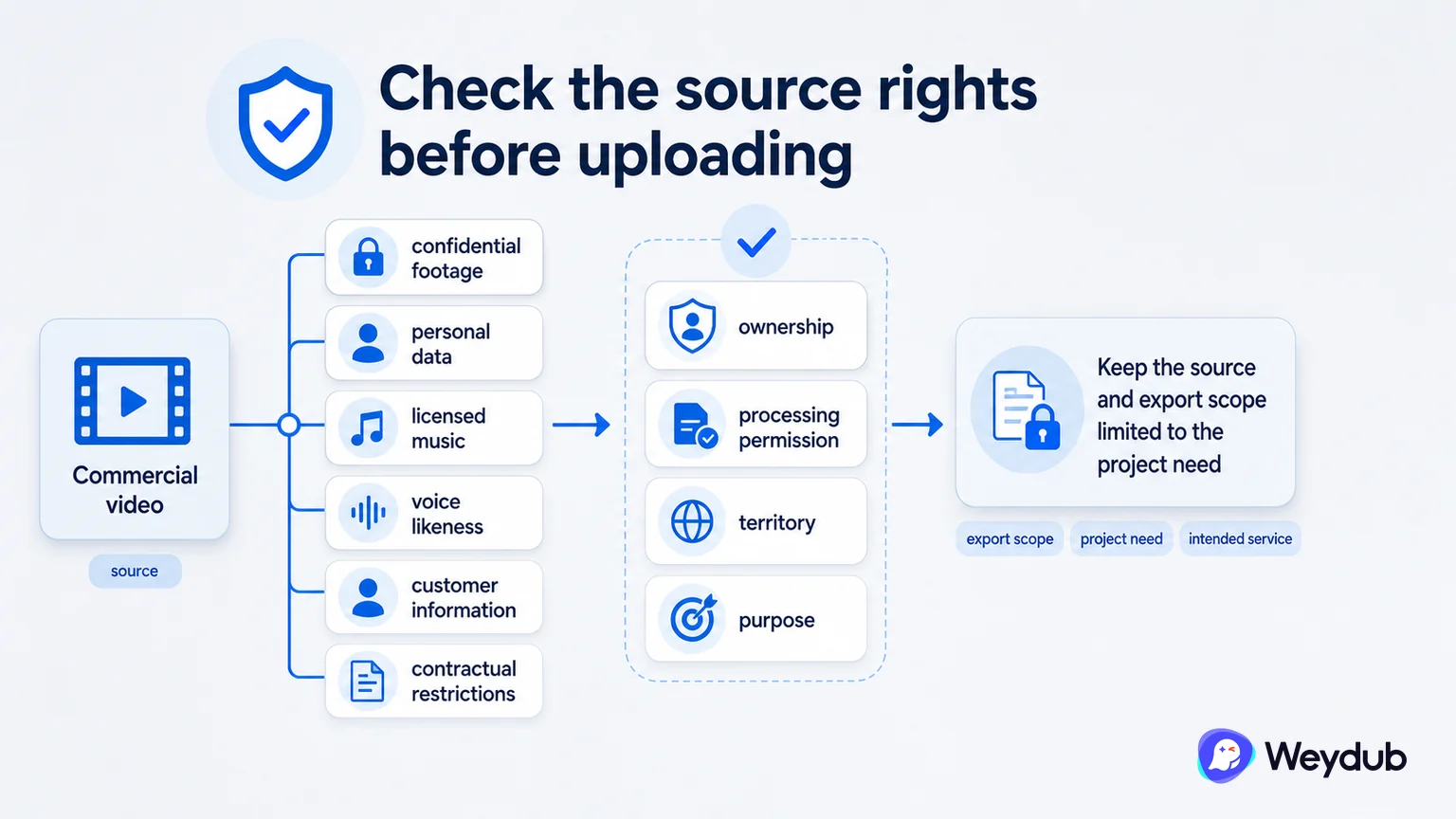
Commercial video can contain confidential footage, personal data, licensed music, voice likeness, customer information, or contractual restrictions. Confirm the organization is allowed to process the asset through the intended service and account.
- Confirm ownership, processing permission, territory, and purpose.
- Identify personal, confidential, or third-party material.
- Keep the source and export scope limited to the project need.
Review the service and account controls
Security is more than a login page. Ask about retention, deletion, access roles, model-use policy, storage region, export, logs, API keys, and what happens to temporary files or failed jobs. Record the policy version and owner responsible for approval.
| Control | Question | Evidence |
|---|---|---|
| Access | Who can upload, view, export, or delete? | Roles and account settings |
| Retention | How long are source and outputs kept? | Policy and deletion path |
| Use | Can content be used for model improvement? | Terms and configuration |
| Handoff | Where do files and keys go next? | Export and integration record |
Make deletion and incident handling testable
Before a commercial batch, test a non-sensitive asset and document upload, processing, export, deletion, and access revocation. Do not place credentials or private customer details in public documentation or an Insights page.
- Classify the asset and permission.
- Approve service, account, and processing scope.
- Run a controlled test.
- Verify export, deletion, and access boundaries.
- Record owner, exceptions, and incident route.
Frequently asked questions
Is a paid service automatically safe for commercial video?
No. Review actual terms, retention, access, model-use, storage, and deletion controls against the project requirements.
Should security details be published in a public article?
Publish general decision guidance, but keep credentials, private URLs, customer data, internal tests, and sensitive operational details internal.
Related theme: Localization production
Weydub workflow
Take the next production step
Connect episodes, language work, review, and delivery when a short drama needs more than a one-off file transformation.