
Distribution model
Independent app, YouTube, or platform distribution: three release businesses
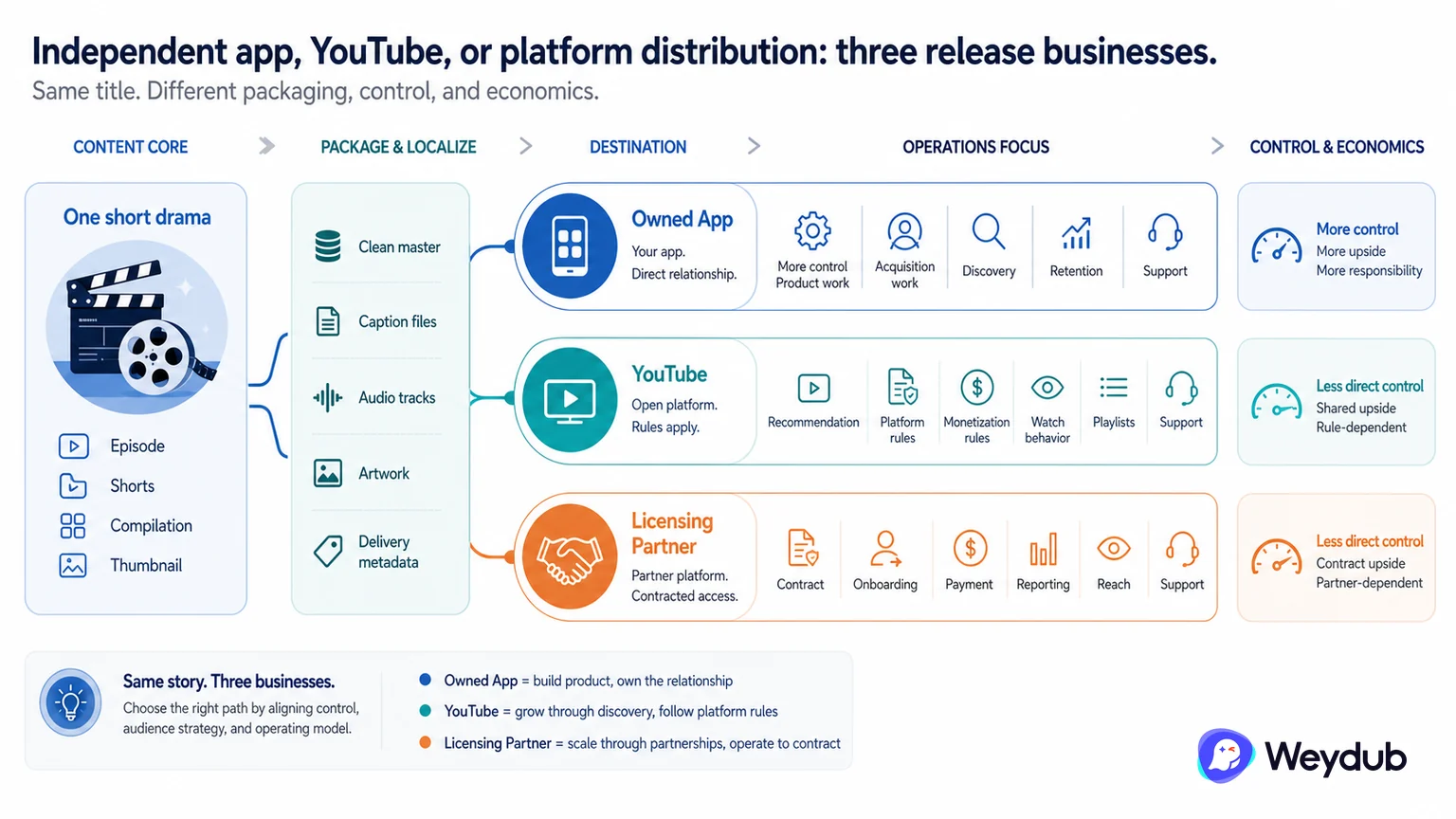
The same short drama can be packaged for an owned app, a channel, or a licensing partner, but the control and economics differ.
Key conclusions
- An owned app controls more of the funnel but carries more product and acquisition work.
- YouTube provides channel distribution but follows platform packaging and monetization rules.
- A licensing partner can add reach while reducing direct control and changing reporting.
An app connects content to onboarding, payment, recommendation, customer support, and retention. A YouTube channel connects content to discovery, watch behavior, playlists, and platform monetization. A distribution partner connects a title to another company's audience and operations through a contract.
The localization package changes with the destination. An app may need store screenshots, metadata, UI strings, and multiple content versions. YouTube may need episode, Shorts, compilation, thumbnail, and playlist assets. A partner may specify a clean master, caption files, audio tracks, artwork, and delivery metadata.
Choose the route based on the capability the team wants to own. Do not compare a platform's gross reach with an app's net revenue without matching the costs, rights, and operating responsibilities.
The destination changes the business
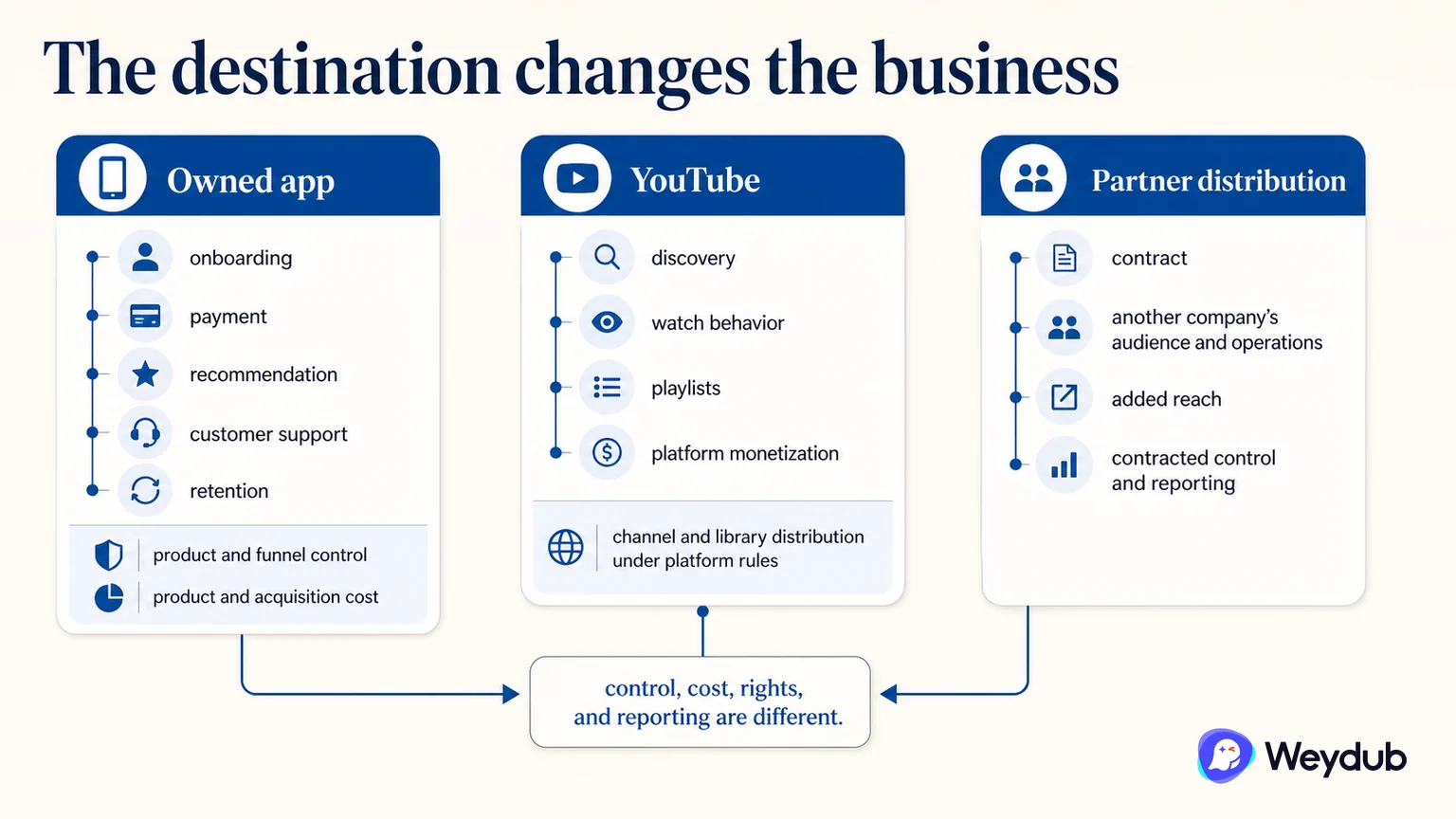
An app connects content to onboarding, payment, recommendation, customer support, and retention. YouTube connects content to discovery, watch behavior, playlists, and platform monetization. A licensing partner connects a title to another company's audience and operations through a contract.
The same series can be adapted to all three, but control, cost, rights, and reporting are different. Do not compare gross platform reach with owned-product net revenue without matching the responsibilities.
- Owned app: product and funnel control with product and acquisition cost.
- YouTube: channel and library distribution under platform rules.
- Partner distribution: added reach with contracted control and reporting.
The delivery package follows the destination
An app may need store screenshots, metadata, UI strings, and multiple content versions. YouTube may need episodes, Shorts, compilations, thumbnails, playlists, captions, and audio choices. A partner may specify clean masters, separate tracks, artwork, and delivery metadata.
The language version is only one part of the package. Keep the audience, territory, rights, and approved version visible in every handoff.
| Destination | Primary operating work | Typical localized package |
|---|---|---|
| Owned app | Product, acquisition, payment, retention | UI, store, episodes, subtitles, audio, support |
| YouTube | Channel, discovery, playlists, library | Episodes, Shorts, thumbnails, captions, metadata |
| Partner | Contract, acceptance, reporting | Master, tracks, captions, artwork, metadata, rights |
Choose the route by capability
The right question is which capability the team wants to own and which it is willing to buy or share. Define the release objective and rights scope before producing every variant, then test the first package end to end.
- Define audience, channel, rights, and monetization objective.
- List product, content, language, and delivery responsibilities.
- Prepare the smallest complete package for the route.
- Test viewing, payment or partner acceptance, and reporting.
- Scale only when the operating model is sustainable.
Frequently asked questions
Is YouTube always easier than building an app?
It avoids some product work, but it still requires channel packaging, rights, localization, audience development, and platform-specific operations.
Can one package serve an app, YouTube, and a partner?
Some source assets can be shared, but each destination usually has different technical, metadata, rights, and audience requirements.
Related theme: Distribution and delivery
Weydub workflow
Take the next production step
Prepare a localized version with subtitles, voice, timing, and a delivery path that matches the destination.