
Rights and compliance
What rights should an AI short drama clear before going overseas?
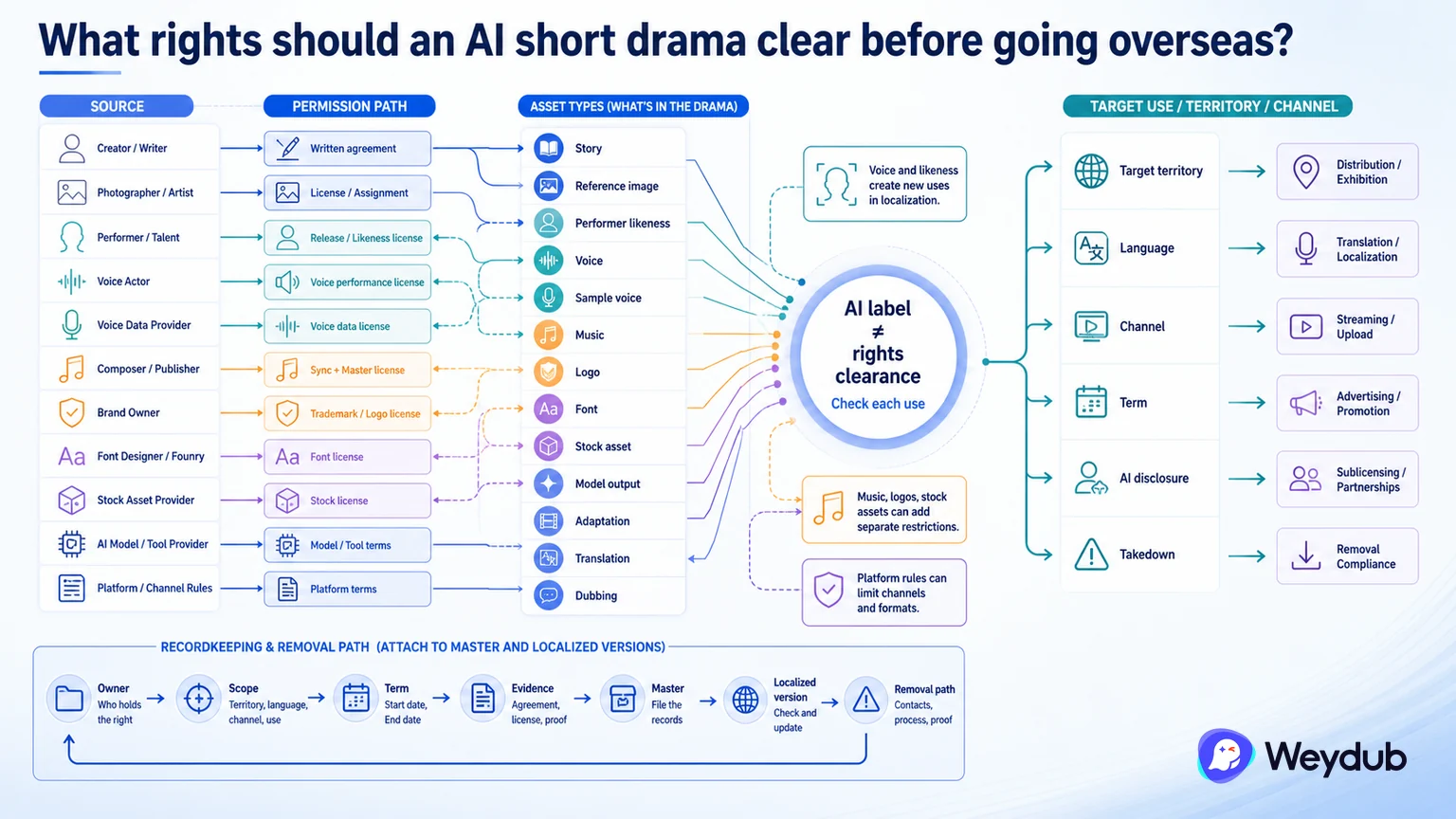
Training, source materials, likeness, voice, generated outputs, adaptation, territories, and channel use can create different rights questions.
Key conclusions
- Document the source and permission path for generated and reference assets.
- Clear likeness, voice, performer, music, and adaptation rights for the target use.
- Record territory, language, channel, term, AI disclosure, and takedown responsibilities.
An AI label does not answer who may use a character, voice, image, script, or generated scene. The project should know what material was supplied, what permission covers it, and whether that permission extends to translation, dubbing, advertising, sublicensing, and the target territory.
Voice and likeness need particular care because a localized version can create new uses of an identity. Music, logos, stock assets, and platform-specific disclosure rules can add separate restrictions. These issues should be resolved before a batch is processed, not discovered after a channel rejects it.
A rights checklist should be attached to the master and its localized versions. It should name the owner, scope, evidence, term, and removal path, while keeping confidential agreements out of the public content system.
An AI label does not answer the rights question
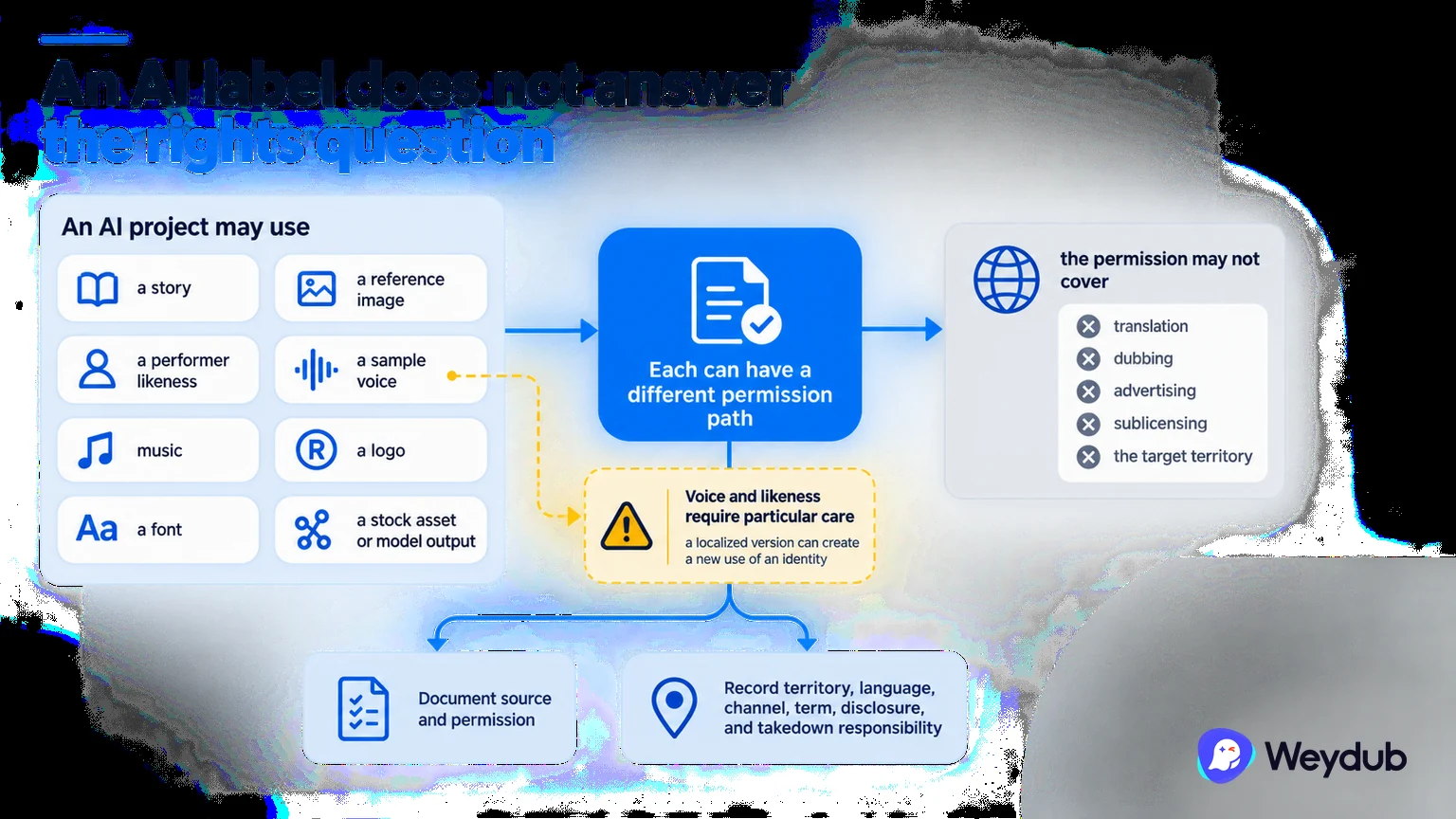
An AI project may use a story, reference image, performer likeness, sample voice, music, logo, font, stock asset, or model output. Each can have a different permission path, and the permission may not cover translation, dubbing, advertising, sublicensing, or the target territory.
Voice and likeness require particular care because a localized version can create a new use of an identity. Platform disclosure and takedown obligations can also differ by channel.
- Document source and permission for generated and reference assets.
- Clear likeness, voice, performer, music, adaptation, and advertising uses.
- Record territory, language, channel, term, disclosure, and takedown responsibility.
Attach the checklist to the master and its versions
A rights record should name the owner, scope, evidence, term, territory, permitted operations, and removal path. Keep confidential agreements and credentials outside public content and public metadata, while preserving enough internal traceability for release decisions.
The same record should show which localized output was authorized. A global English version and a Brazilian Portuguese version may not share the same territory or partner scope.
| Rights area | Question | Evidence to retain |
|---|---|---|
| Source and adaptation | Who authorized the story and changes? | Agreement, assignment, scope |
| Likeness and voice | May identity or voice be used? | Consent, license, use and term |
| Music and assets | Can it travel to the target channel? | License, territory, attribution |
| AI disclosure | What must the platform or audience know? | Policy and release record |
Clear rights before batch processing
Resolve permission and release boundaries before processing a large series. A rights issue discovered after localization can invalidate many versions and create avoidable cost. The release owner should know the evidence, exception, and takedown path before publishing.
- Inventory source, reference, voice, music, and generated assets.
- Map owner, permission, territory, language, channel, and term.
- Record disclosure and takedown obligations.
- Approve the master and localized version scope.
- Keep the rights record with the internal release package.
Frequently asked questions
Does a model license clear the rights to the final AI drama?
Not by itself. Story, likeness, voice, music, reference assets, adaptation, territory, channel, and performer permissions may require separate review.
Should rights details be published in the English Insights article?
Public pages can explain the decision boundary, but confidential agreements, credentials, private assets, and internal evidence must remain internal.
Related theme: Stakeholders, rights, and responsibilities
Weydub workflow
Take the next production step
Keep source, language, review, and delivery boundaries clear as partners and rights scope change.