
Global production
Why an AI drama's first language does not have to be Chinese
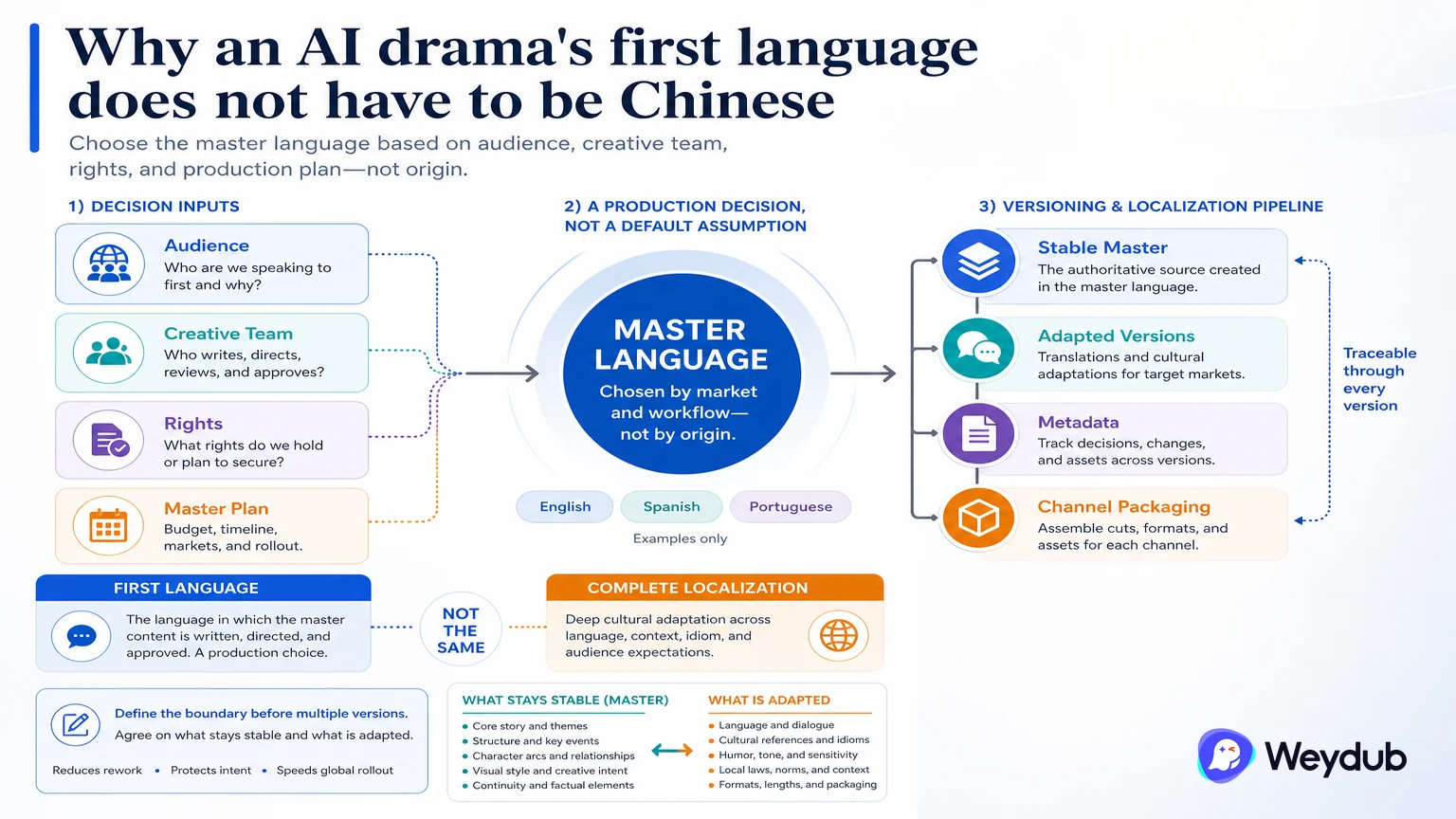
The first language should follow the intended audience, creative team, rights, and master-production plan rather than a default assumption about origin.
Key conclusions
- Choose the master language with the target market and creative workflow in mind.
- A first language is not the same as complete cultural localization.
- Keep the master and later language versions traceable even when production starts overseas.
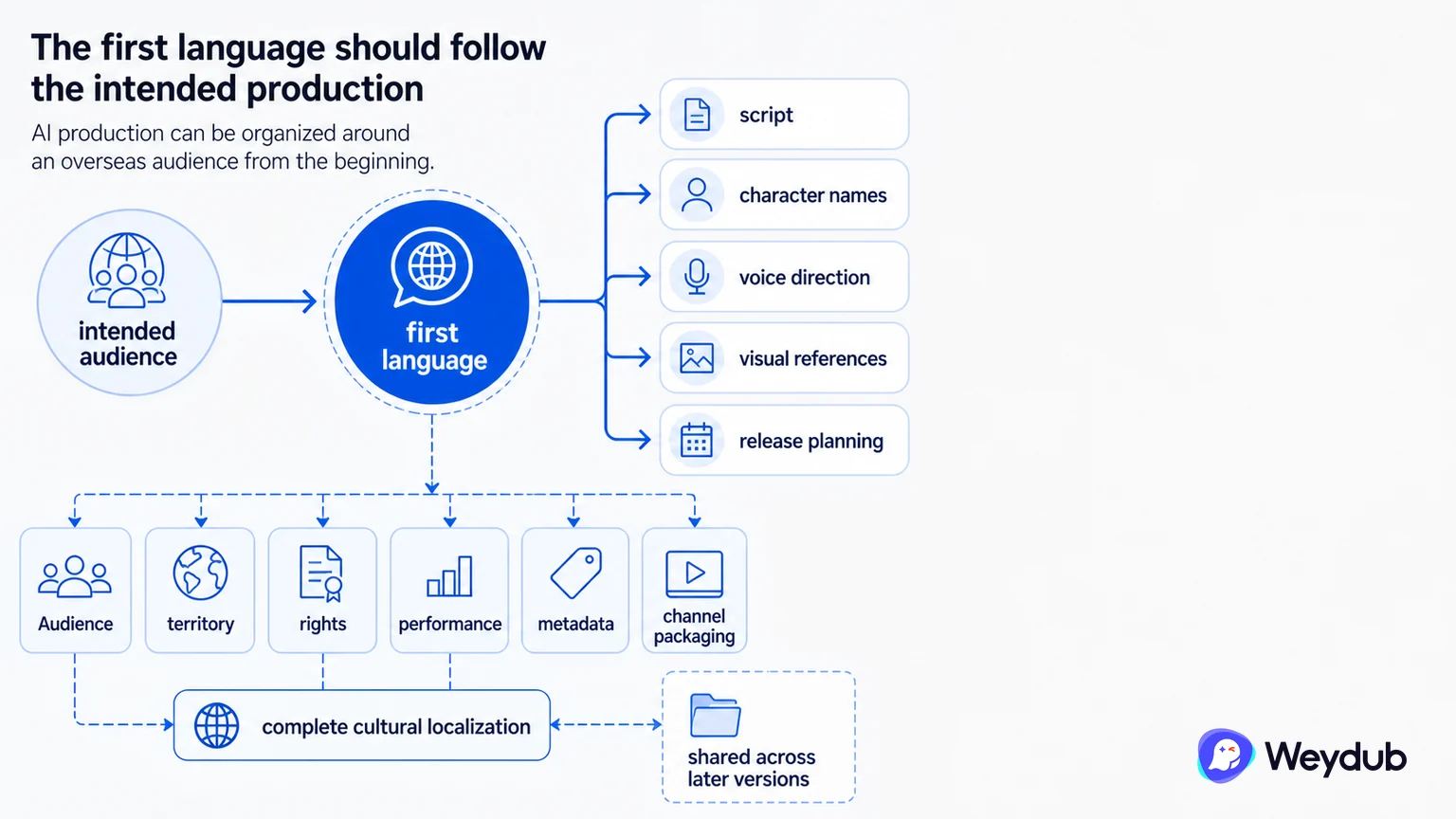
AI production can be organized around an overseas audience from the beginning. The script, character names, voice direction, visual references, and release plan may be created in English, Spanish, Brazilian Portuguese, or another target language when that is where the project will be evaluated first.
This does not remove localization decisions. A language version still needs audience-appropriate terminology, performance, metadata, rights, and channel packaging. Nor does it mean that a project cannot use a shared visual master with several language versions.
The useful production question is which elements should remain stable and which should be adapted. Define that boundary before generating multiple versions so the team knows whether it is localizing one series or maintaining several independent productions.
The first language should follow the intended production
AI production can be organized around an overseas audience from the beginning. Script, character names, voice direction, visual references, and release planning may start in English, Spanish, Brazilian Portuguese, or another target language when that is where the project will be evaluated first.
A first language is not the same as complete cultural localization. Audience, territory, rights, performance, metadata, and channel packaging still need explicit decisions.
- Choose the master language with audience and creative workflow in mind.
- Keep first language separate from territory and complete localization.
- Record which visual and story assets are shared across later versions.
Choose what stays stable and what adapts
A project may share a visual master while adapting text, voice, subtitle timing, and metadata. Another project may need different cast, setting, story structure, or cultural premise and therefore becomes several independent productions. The boundary should be decided before generating many versions.
| Decision | Shared master path | Independent version path |
|---|---|---|
| Story and picture | Stable source and derived language outputs | Rebuilt for target audience |
| Voice | Mapped language versions | Different cast or performance |
| Text and metadata | Localized within shared context | New creative and market brief |
| Operations | One lineage with language branches | Separate production lineage |
Make the language choice testable
Define the intended audience, market, channel, rights, and acceptance evidence. A target-language sample should test story clarity, performance, picture, terminology, and packaging rather than only whether a model can generate fluent lines.
- Name the first audience and release objective.
- Set the master language and shared asset boundary.
- Prepare a representative sample.
- Review language, story, voice, picture, rights, and delivery.
- Branch into further languages only with explicit lineage.
Frequently asked questions
Does starting in English mean the project is fully localized for English markets?
No. It still needs audience, locale, territory, channel, rights, performance, metadata, and delivery review.
Can a project have more than one first language?
It can, but those branches should be treated as deliberate production choices with shared or separate lineage clearly documented.
Related theme: AI media workflows
Weydub workflow
Take the next production step
Keep automation, review, and delivery connected when AI-generated media needs to become a usable release.